
Pennsylvania Released Inmates Explained
“Released” describes an exit from a named custodian. It does not always mean unrestricted return to the community. A county jail may release someone on bail, after time served, under a court order, to county supervision, or into another authority's custody. The Pennsylvania Department of Corrections may record parole, reparole, expiration of the maximum sentence, a court-ordered release, or another exit. That last group can include a hospital transfer, another jurisdiction, or a released detainer. Each event leaves a different trail.
The agency that held the person is the first key. County sheriffs or prison boards maintain local booking and separation records. The Pennsylvania Department of Corrections, called DOC, maintains state-prison and state-parole records. The Pennsylvania Parole Board makes state parole decisions, while DOC staff supervise people after state release. Federal Bureau of Prisons and immigration records sit outside both systems. A vanished name proves only that the current search no longer returns that record.
Important: A current roster miss is not proof of release. Check the court record and any likely receiving custodian.
The Pennsylvania Department of Corrections agency page identifies the statewide corrections system.
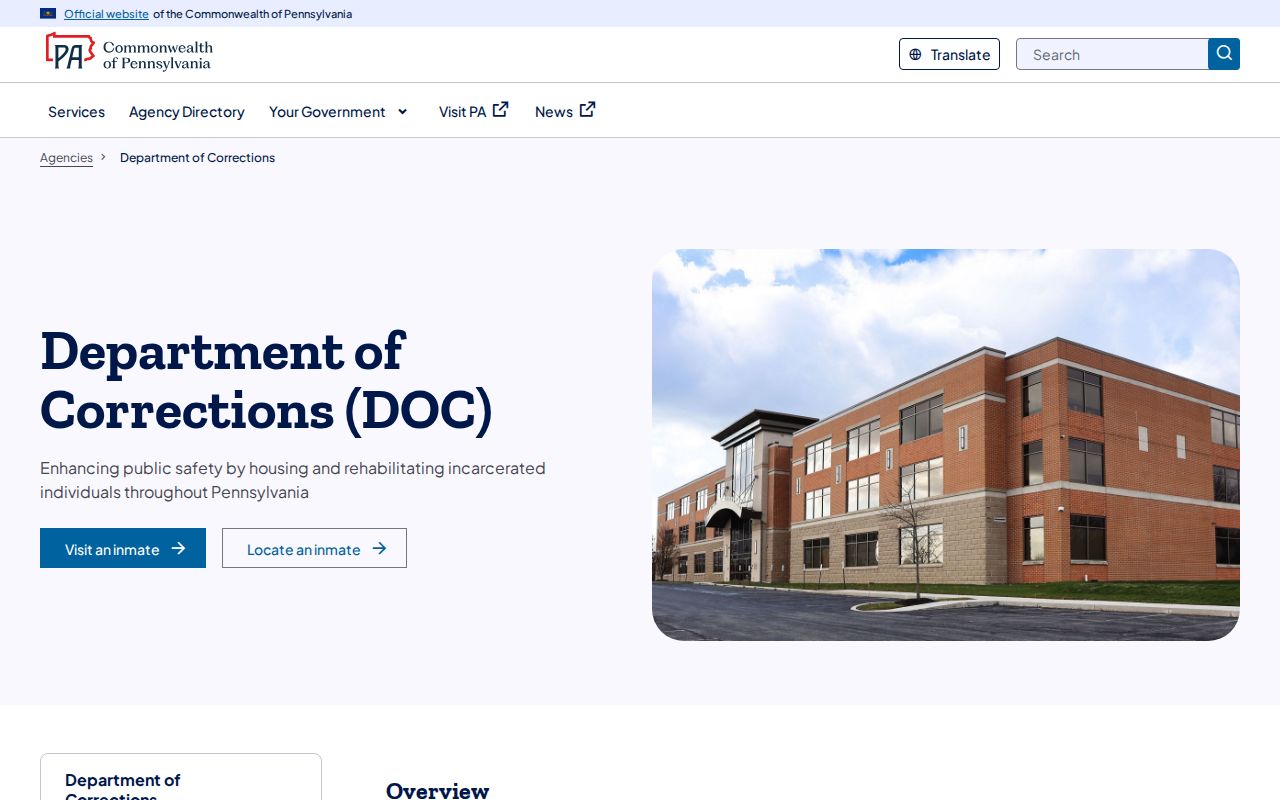
That state system covers DOC institutions and supervision, not every person released from a Pennsylvania county jail.
Pennsylvania Release Types Compared
Pennsylvania uses an indeterminate sentence for most state cases. The court sets a minimum and maximum term. An eligible person may be considered for parole at the minimum, but that date does not compel release. Parole is conditional freedom while the sentence continues. A maximum-date release ordinarily ends that sentence unless another lawful hold applies. Reparole follows a return to custody for a parole violation and a later release.
| Release or exit | Meaning | Best record source |
|---|---|---|
| Bail or bond | County detention ends while the case continues | County separation record and UJS docket |
| Time served or court order | A sentence or judicial order authorizes the exit | County or DOC record plus docket |
| State parole or reparole | Institutional custody ends while state supervision continues | DOC supervised-person result and Board Action |
| Maximum expiration | The state sentence reaches its legal ceiling | DOC separation material and sentencing docket |
| Transfer or detainer | One custodian releases the person to another | Both sending and receiving systems |
| Federal release | BOP custody ends, subject to any other authority | BOP locator and federal court record |
A favorable parole vote is not the gate-exit event. Home-plan review, required programs, paperwork, or a detainer can keep an approved case pending. Likewise, a transfer from a state correctional institution to a community corrections setting may remain within correctional or parole control. The precise wording on the source record matters.
Pennsylvania Release Record Fields
No single Pennsylvania form contains every release fact. A focused record request can ask for fields the custodian already maintains, such as identity, commitment date, separation date and time, separation type, and a destination or transfer code. County layouts differ. DOC's public locator has a narrower role. Its supervised-person mode can display an actual Release Date, parole and inmate identifiers, aliases, state or district information, descriptive details, a photograph, and a last update.
| Field | What it can establish |
|---|---|
| Name and identifier | Which person the agency record describes |
| Commitment or booking date | When the documented custody period began |
| Separation date and time | When the person left that custodian, if maintained |
| Separation type | Parole, sentence expiration, court order, transfer, or another coded event |
| Destination or custodian | Whether another agency or placement received the person |
| Supervision information | Whether state or county control may continue after confinement |
The official DOC locator instructions describe the two public search modes and their scope.
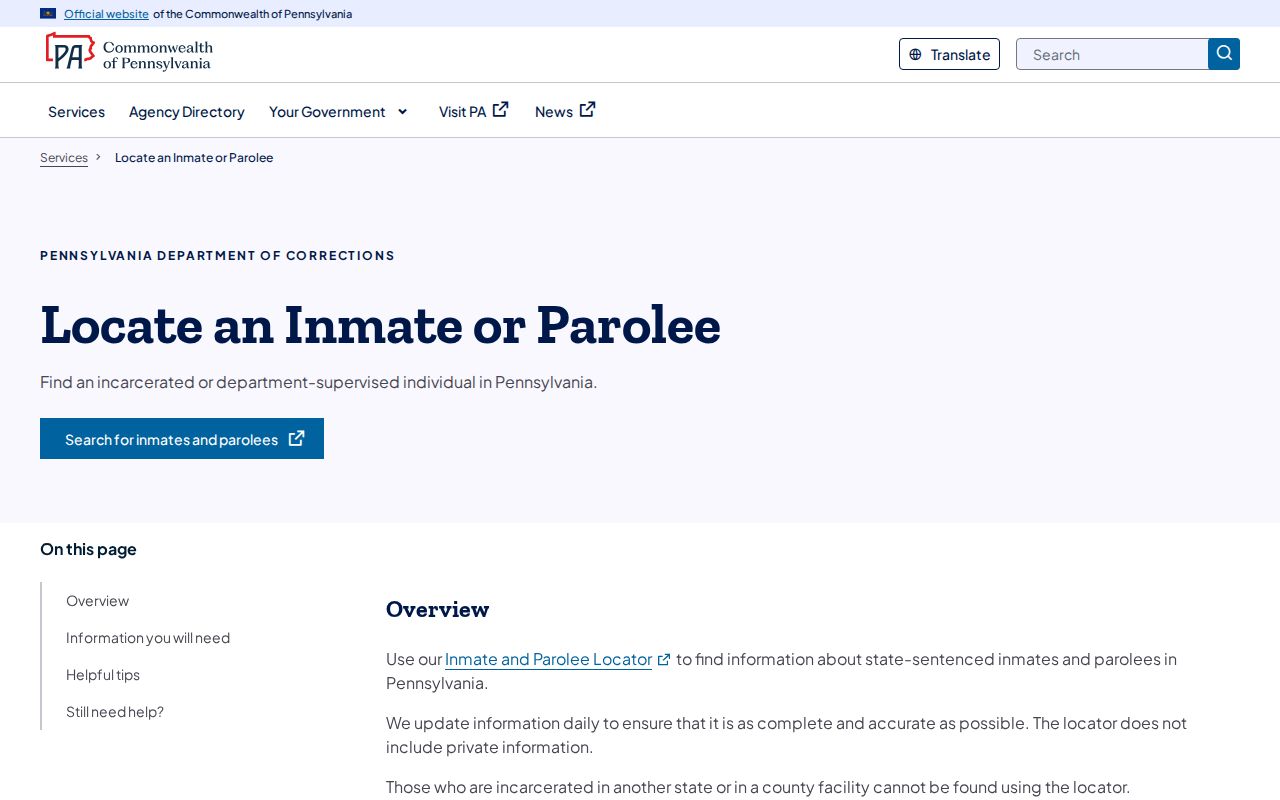
The instructions support current inmate and supervised-person searches, but they do not promise a permanent archive of all former prisoners.
Request Pennsylvania Release Records
Pennsylvania's Right-to-Know Law, 65 P.S. §§ 67.101–67.3104, supplies the access framework for Commonwealth and local agency records. It sets a presumption of access, assigns open-records officers, recognizes exemptions, and provides an appeal route. It does not force an agency to answer a question or create a new report. Ask for an existing, well-described record.
- Identify the custodian. Send a county-jail request to that county's designated officer and a state-prison request to DOC.
- Give the full name, DOC or parole number if known, record category, and a narrow date range.
- Request existing separation fields, including date, type, and destination code if the agency keeps them.
- Use UJS procedures for filed court records. Judicial and executive-agency access routes are not interchangeable.
- Review any denial or redaction notice and use the Office of Open Records appeal process when it applies.
The DOC Right-to-Know page identifies the agency's open-records route and DC-ADM 003. Requests should seek a record, not an explanation, and protected details may be withheld or redacted under Pennsylvania law.
County fees, forms, retention schedules, and response details are not uniform. Use the Pennsylvania County Directory to reach the locality that held the person. For a statewide DOC case, the agency request page is the live source for current submission details. Narrow wording is more useful than asking for “everything” about a person.
Pennsylvania Release Record Limits
Public access can change after expungement, Clean Slate limited access, sealing, or another lawful restriction. Pennsylvania criminal-history statutes include 18 Pa.C.S. §§ 9121, 9122, 9122.1, and 9122.2. A public portal miss may reflect one of those limits. It may also reflect a spelling issue, an alias, incomplete inputs, delayed data, or the use of the wrong custody system.
Booking photographs need separate care. In Mezzacappa v. Northampton County, decided in 2025, the Pennsylvania Supreme Court treated booking photos as criminal-history-record information governed by CHRIA. A county prison cannot disseminate one merely because it holds the image. The photo proves a booking or identification event, not guilt, current custody, present appearance, or release.
No enacted statewide law creating a general commercial booking-photo removal right was verified as of August 12, 2026. House Bill 1585 passed the House in June 2026 and moved to the Senate Judiciary Committee, but remained proposed legislation. Current access turns on the governing records law, agency authority, and the status of the case record.
Pennsylvania Release Counts Need Context
DOC's 2024 Annual Statistical Report counted 11,646 releases or exits, up from 11,396 in 2023. The newer total contained 2,038 unconditional exits, 8,106 conditional exits, and 1,502 deaths or other exits. Within those groups were 1,989 maximum-sentence expirations, 49 court-order releases, 4,906 state paroles, 15 county paroles, and 3,185 state reparoles.
The remaining “other” category includes transfers to state hospitals or other jurisdictions and released detainers. Deaths are also counted in the total. For that reason, 11,646 cannot be described as the number of distinct people who returned to the community. It is a flow count with formal categories.
The DOC Reports and Dashboards page supplies the dated statewide material behind those distinctions. Always retain the report year and category labels when comparing Pennsylvania release trends.
Find Pennsylvania Released Inmates
A reliable search starts by classifying the custody. A Pennsylvania arrest does not make the case a DOC case. County-only detention can begin and end without a state-prison record. State parole can follow an SCI release even when the sentencing county is far from the institution. Federal and immigration custody require separate tools.
- Read the UJS docket and identify the sentencing court, commitment, and likely custodian.
- For state custody, run both DOC locator modes. Use an inmate or parole number when available.
- For county custody, check that county's release source or request its booking and separation record.
- If parole applies, reconcile the Board Action, DOC release date, and any pending release requirement.
- Check PA SAVIN for event information and alerts, then confirm with the source agency.
- Use BOP or ICE only when the facts point to federal or immigration custody.
- Request the underlying record when a public portal cannot resolve the date or exit type.
Record the spelling, identifiers, mode, filters, and time used for each query. A no-result means only that the person was not found with those inputs in that system at that time. It does not prove release, discharge, or absence from every other custodian.
Pennsylvania DOC Release Search
The DOC Inmate/Department Supervised Individual Locator has two operational paths. The inmate mode accepts a name or inmate number and offers filters such as committing county, current location, age or birth information, citizenship, and gender. A result may show a DOC number, aliases, descriptive details, photograph, committing county, current or permanent location, and last update. That result supports present DOC jurisdiction. It is not itself a release record.
For a person believed released from an SCI to state parole, select Department Supervised Individual. Search fields can include name, parole or inmate number, release date, birth information, county of residence, district office, and gender. A match may display the actual Release Date, identifiers, aliases, state or district data, photograph, and an absconder flag. That date marks release from institutional custody into supervision. It does not prove final discharge.
| Locator mode | Useful inputs | Correct reading |
|---|---|---|
| Inmate | Name, inmate number, county, location, birth or age filters | Current DOC jurisdiction, not a historical release result |
| Department Supervised Individual | Name, parole or inmate number, release date, county, district | Institutional release followed by active DOC supervision |
| No result | Try exact identifiers, aliases, and both modes | Inconclusive without docket and custodian checks |
The live DOC locator exposes those distinct inmate and supervised-person choices.
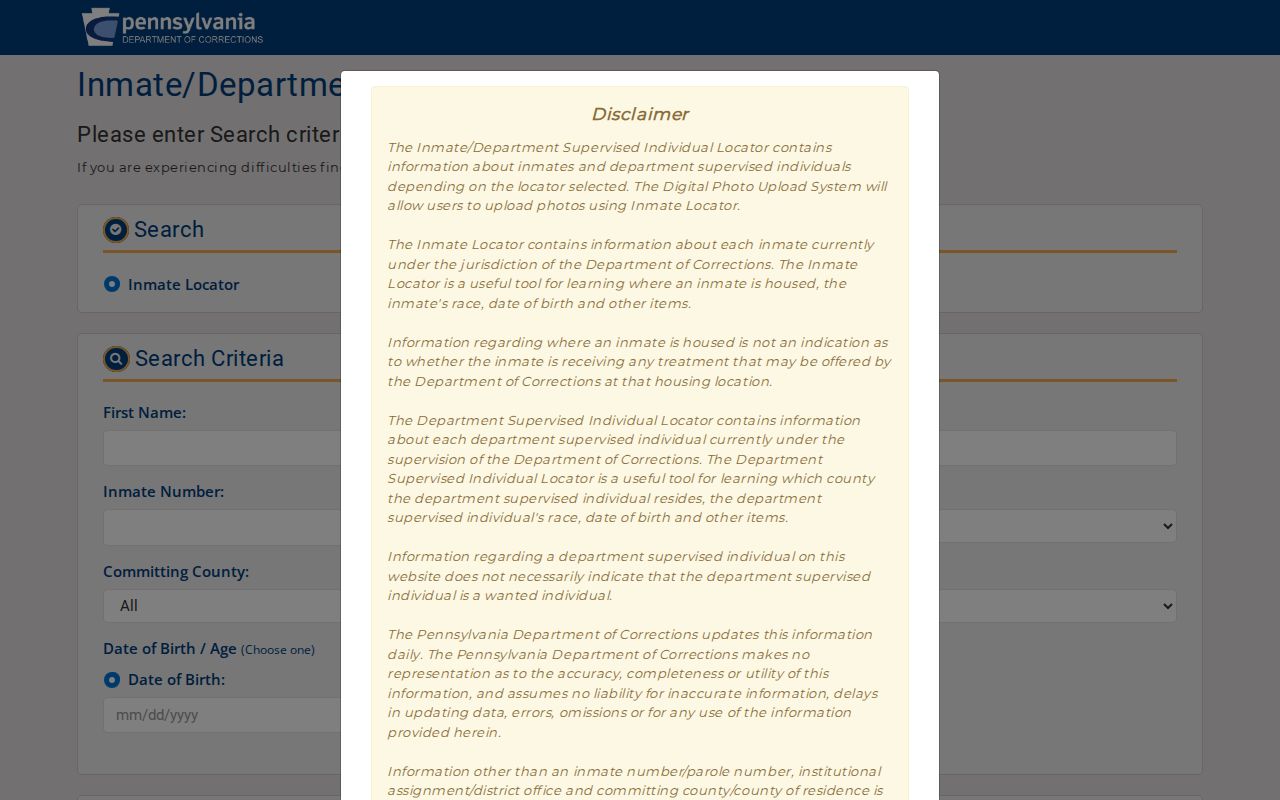
A fuller explanation of the search limits appears on the DOC offender search page.
Pennsylvania County Release Search
Pennsylvania's 67 counties do not share one uniform jail-release interface. Some publish a current roster. Others use a vendor search, depend on PA SAVIN, or require a direct inquiry. A current roster is designed to show people still held. Once a person leaves, the booking and separation record may remain with the county even though the name disappears from that live view.
The correct county is the one whose facility held the person, not always the county of residence or later supervision. Regional arrangements and transfers can shift the record path. Philadelphia also operates several adult facilities within one city prison system. A county page therefore serves as records routing, not just geographic navigation.
Question: Does a county roster miss confirm release? No. The person could have posted bail, completed a term, moved to DOC, entered another county, or transferred to federal or immigration custody. Match the docket to the sending and receiving systems before drawing a conclusion.
Pennsylvania Release Records in UJS
The Unified Judicial System Case Search often remains useful after a current custody entry disappears. A criminal docket may show bail, disposition, the judgment of sentence, minimum and maximum terms, credit, probation or parole, revocation, and later orders. Those entries can explain the legal authority behind a release. They do not usually record the physical time someone crossed a facility gate.
Choose the correct court level and county, then match the participant with case and identity details. Sealed, expunged, and limited-access cases may be absent from public results. A court search miss is not proof that no case or custody event existed.
The UJS Case Search is Pennsylvania's durable statewide docket entry point.
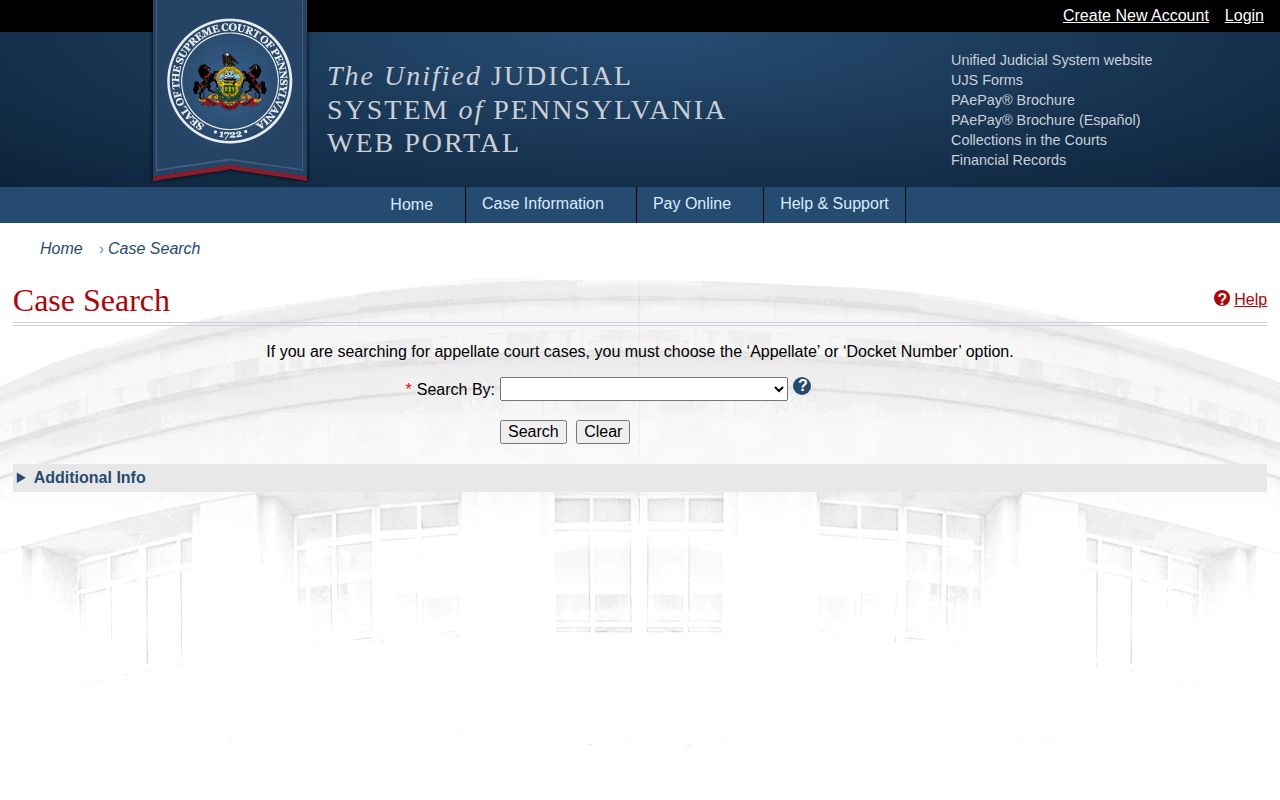
Use the docket to explain legal authority, then use the custodian's separation record for the actual movement event.
Pennsylvania Discharge Proof Differs
A DOC supervised-person result can show a Release Date while the sentence continues under parole. It does not promise a supervision-end date or a discharge-certificate field. Later disappearance from the locator may be consistent with discharge, but it cannot establish when supervision ended or why the result stopped appearing.
When final completion matters, reconcile the final Board or DOC document with the sentencing docket. A focused DOC records request may also identify an existing discharge or sentence-status record. Keep the terms separate: release ends confinement by one custodian, parole continues the sentence under conditions, and discharge ends the applicable correctional or supervision obligation.
The Pennsylvania Parole Board interview process shows why review, decision, and release are separate stages.
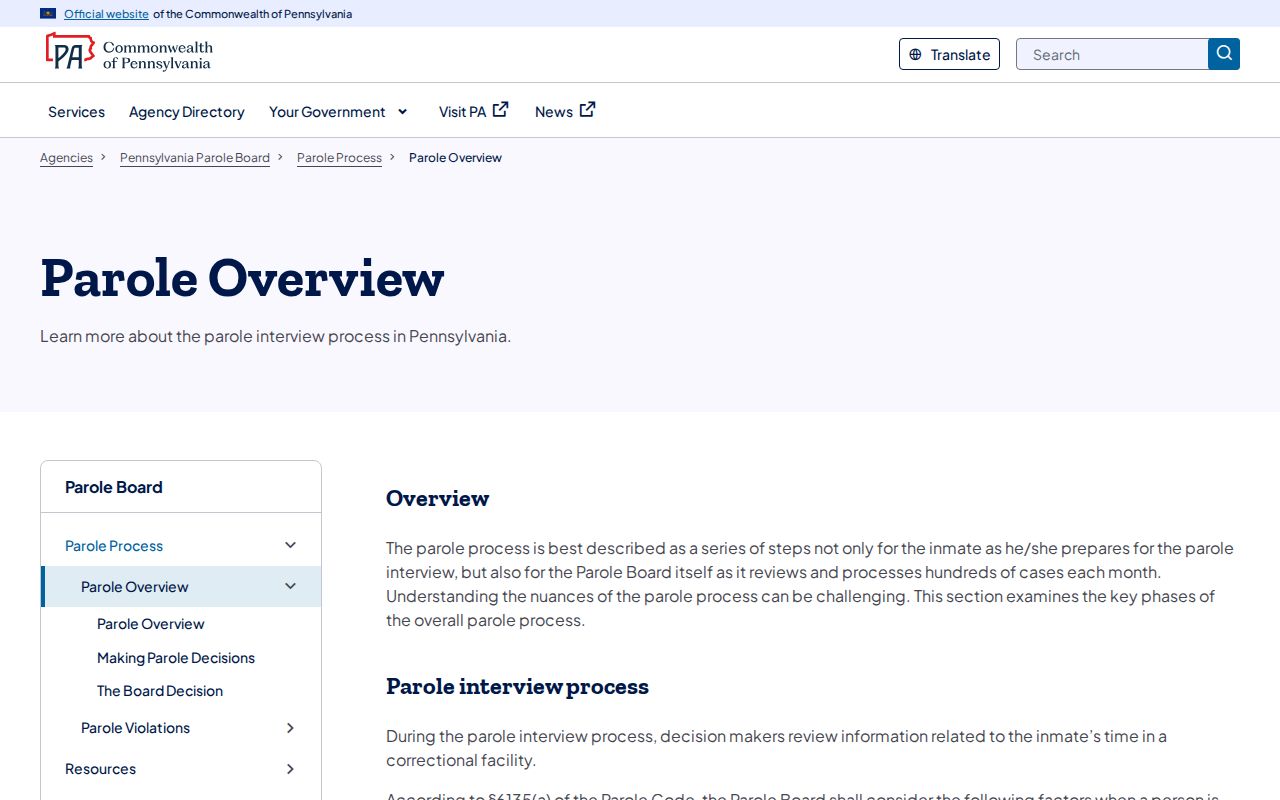
A Board grant can still precede home-plan work, program steps, detainer resolution, or administrative processing.
Pennsylvania Released Locator Limits
The most important DOC search fact is what the public locator does not offer. It has no verified field labeled Projected Release Date or Tentative Release Date. It also does not advertise a permanent Released or Discharged archive. The supervised-person Release Date is an actual transition from an SCI into active DOC supervision for a narrower group.
A fully discharged former prisoner may require a UJS docket, final Board Action, or DOC record request. Do not turn a current inmate's judicial minimum into a promised release date. Do not assume that every former state prisoner remains searchable for a set retention period. Pennsylvania's public tools make those claims unsupported.
Correct reading: An inmate result shows current DOC jurisdiction. A supervised result with a Release Date shows institutional release into continuing supervision.
Pennsylvania Release Alerts Through SAVIN
PA SAVIN is Pennsylvania's Statewide Automated Victim Information and Notification program, delivered through VINELink. Official material describes coverage for county jails, state prisons, and state parole. Available events can include release, transfer, escape, recapture, and movement to another location. The service is an event signal, not a certified historical discharge archive.
Search a specific person, match the identity and facility details, then read the displayed status. “Out of Custody” reflects a participating agency feed. “Paroled” means confinement ended while supervision continues. A no-result can follow timing, inputs, transfer, or record availability. Pennsylvania publishes no universal released-result retention period and warns against relying on the system alone.
The Pennsylvania VINELink portal provides the specific-person search.

Confirm any alert with the facility, DOC, court, or receiving agency before treating it as a final release record.
The Commonwealth's PA SAVIN registration instructions explain how to choose phone, text, email, or app notice channels.
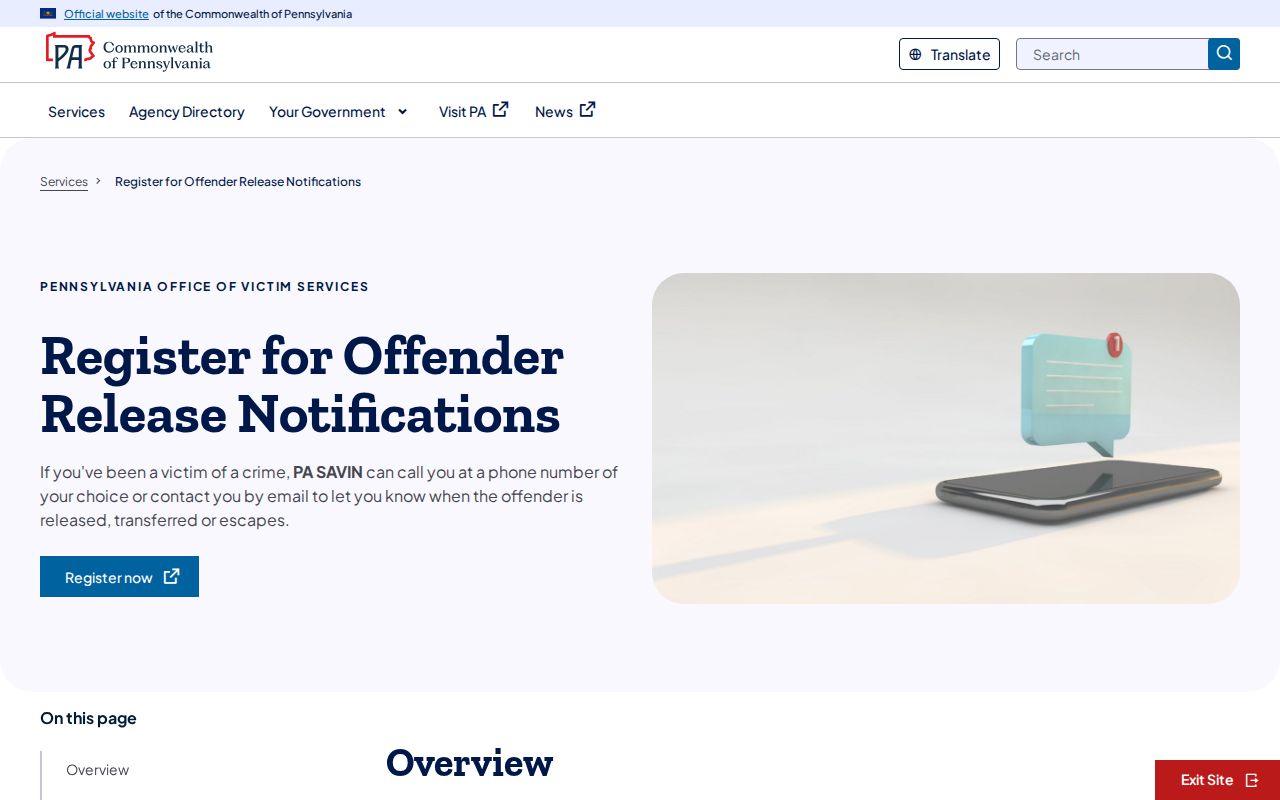
Registration includes a four-digit PIN for phone notices, but every notice still needs source-agency confirmation.
Federal Releases in Pennsylvania
The Federal Bureau of Prisons locator covers federal custody records from 1982 onward. Search by BOP register, DCDC, FBI, or INS number when known, or use name and the available identity filters. Results may include name, register number, age, race, sex, location, and release date. A past date with “Released” or “Not in BOP Custody” addresses BOP custody only.
The BOP Inmate Locator is the official source for that federal layer.
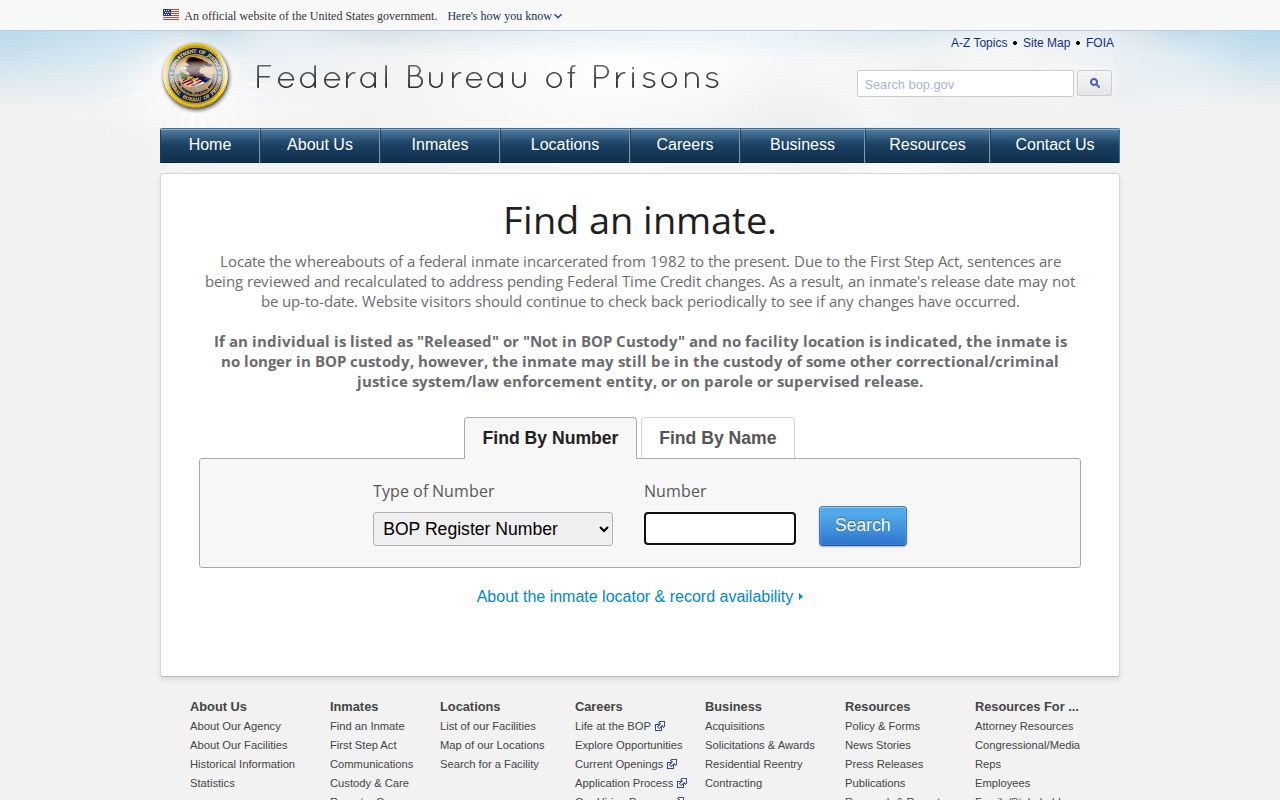
A BOP release does not rule out another correctional agency, a detention authority, or federal supervision.
ICE uses a separate Online Detainee Locator. It covers current detention and people released from ICE custody within the prior 60 days, subject to stated scope limits. Search by an exact nine-digit A-number and country of birth or by exact biographical inputs. A release from a county jail to ICE is a transfer of custody, not a community release.
Pennsylvania Release Sources Compared
Each public system answers a limited question. Start with the known custodian, then use a second source that can test the first result. The table keeps a live custody entry separate from a historical or legal release record.
| Source | Best use | Key limit |
|---|---|---|
| County jail roster | Present local custody | A released person often drops off |
| County separation record | Local exit date, time, and type if maintained | Process and fields vary by county |
| DOC inmate locator mode | Current state custody | Not a release archive |
| DOC supervised mode | SCI release date during active state supervision | Not final discharge proof |
| PA SAVIN | Status events and notifications | May lag and is not certified history |
| UJS docket | Legal authority, sentence, and later orders | Not the physical gate log |
| BOP or ICE | Federal or immigration custody | Does not cover Pennsylvania county or DOC custody |
Pennsylvania detention includes county jails, state correctional institutions, community corrections placements, federal facilities, and immigration detention. Juvenile records require a privacy-first approach. The statewide facility directory distinguishes those types, while county records remain with the proper local custodian.