
Pennsylvania Parole and Probation
Parole and probation are both forms of supervision, yet they begin in different ways. State parole is conditional release from a Pennsylvania state sentence before the maximum date. The Pennsylvania Parole Board decides whether to grant it, while the Pennsylvania Department of Corrections administers field supervision. Probation is a court sentence that may begin without a prison release. County probation departments ordinarily supervise those orders. County parole is also distinct: it may follow a county jail term and remains tied to the county court and local office.
The source must fit the legal order. A state locator record cannot be treated as a full list of county probation cases. Likewise, a county office directory does not establish that the Parole Board granted state parole. The sentencing docket identifies the order, and the supervising agency confirms the current administrative record.
| Supervision | How it starts | Primary verification |
|---|---|---|
| State parole | Conditional release from a state sentence after Board action | DOC supervised-individual locator and parole office |
| County parole | Conditional release from a county term | County court docket and county supervision office |
| Probation | Court-ordered supervision, with or without confinement first | UJS docket and county probation office |
- Parole
- Conditional release while a sentence continues.
- Probation
- A court-ordered period of community supervision.
- Discharge
- The legal end of supervision or a sentence, shown by the controlling record.
- Absconder
- A person alleged to have stopped reporting as supervision requires.
Verify Pennsylvania Post-Release Supervision
Begin with the case, not a guess about the agency. The Unified Judicial System Case Search can show the sentencing court, disposition, sentence, probation or parole terms, revocation events, and later orders. A docket states legal authority, though it is not a live supervision log. Sealed, expunged, or limited-access matters may be absent.
- Identify whether the sentence was county or state. Note the county, docket number, full name, and date of birth where available.
- For state parole, open the DOC locator and select Department Supervised Individual. Search by parole or inmate number when possible, or use name and birth details.
- Read the Release Date, district or state assignment, identifiers, and last-update information together. A Release Date documents transition from institutional custody into supervision, not final discharge.
- Use the parole-office directory to route the inquiry by district, region, or office type.
- For probation or county parole, use the county probation and parole directory and the court docket. A county-supervised person may not appear in the state locator.
Match more than a name. Parole and inmate numbers, birth data, the committing county, and district information reduce the risk of confusing two people. Agency staff may limit details about an individual case, so the public-facing record should be used as verification rather than a promise that staff will disclose protected information.
The official locator instructions show the two search modes used for Pennsylvania parole verification.
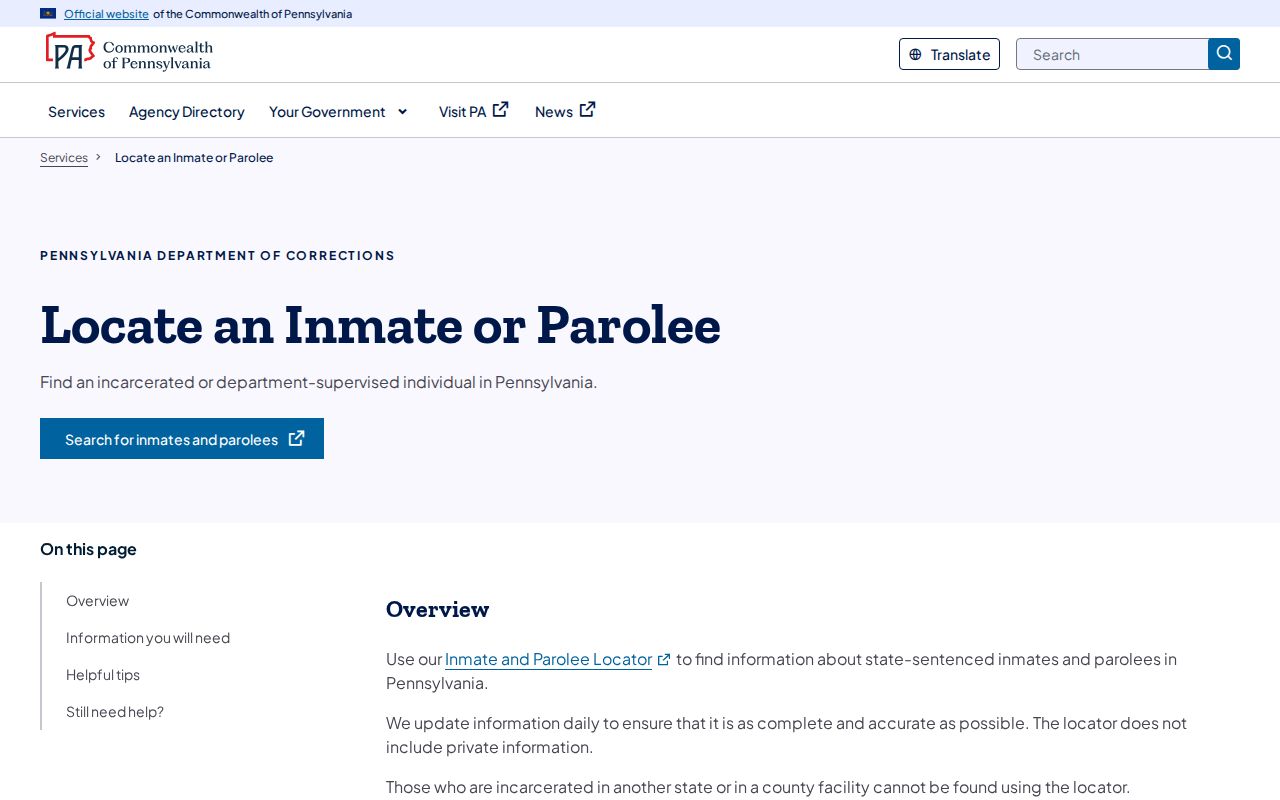
The split between current inmates and supervised individuals is central to reading a release correctly.
Pennsylvania Parole Agencies
The Pennsylvania Parole Board decides state parole matters. DOC carries out field supervision after release. Those roles should not be merged. A Board Action records a grant, denial, rescission, recommitment, or other decision, while the assigned parole office manages reporting and field supervision. County courts and county departments handle most probation and county-parole matters.
The Board contact route is the public path for Board material after the written action has been delivered to the incarcerated person.
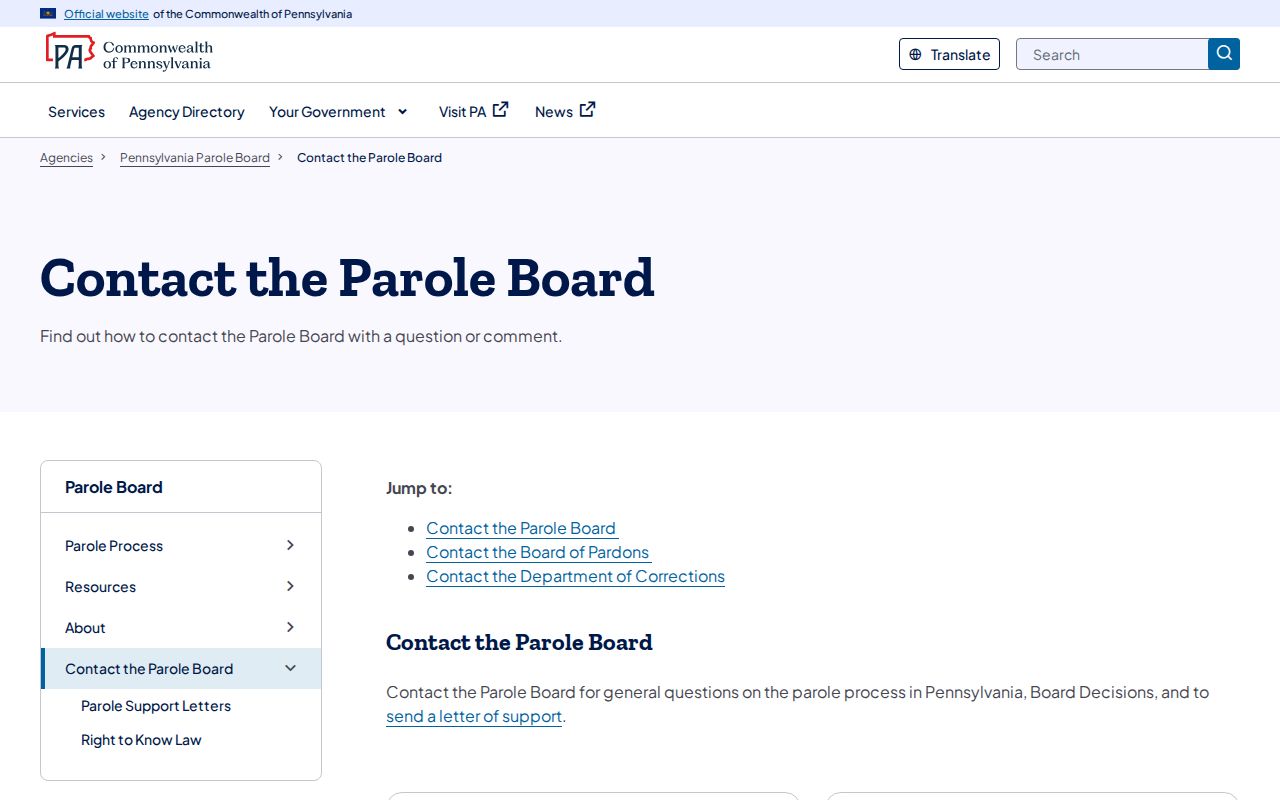
This contact route concerns Board records, not day-to-day county probation reporting.
Decision and Board Action information
Board contact page
Pennsylvania Department of Corrections
State parole office routing and field supervision
Parole offices
Pennsylvania Absconder Status
Conditions are the rules attached to supervision. The exact terms come from the governing order, Board Action, and instructions issued to the person. A violation allegation can lead to further process, but it should not be inferred from a late web update or a locator miss. Revocation means supervision was withdrawn after the required legal process. Recommitment can return a state parolee to DOC custody.
DOC maintains a Most Wanted Absconders page for people alleged not to be reporting as state parole requires. The locator may also show an asterisk meaning “Wanted: Absconder.” That warning shows continuing state supervision following release. It does not, by itself, show present incarceration or a new release event. The public should not attempt apprehension; the official page provides a confidential tip channel. County warrants and county absconder matters must be checked with the county court or supervising department.
The DOC custody-status page explains how PA SAVIN sends state custody and parole events.
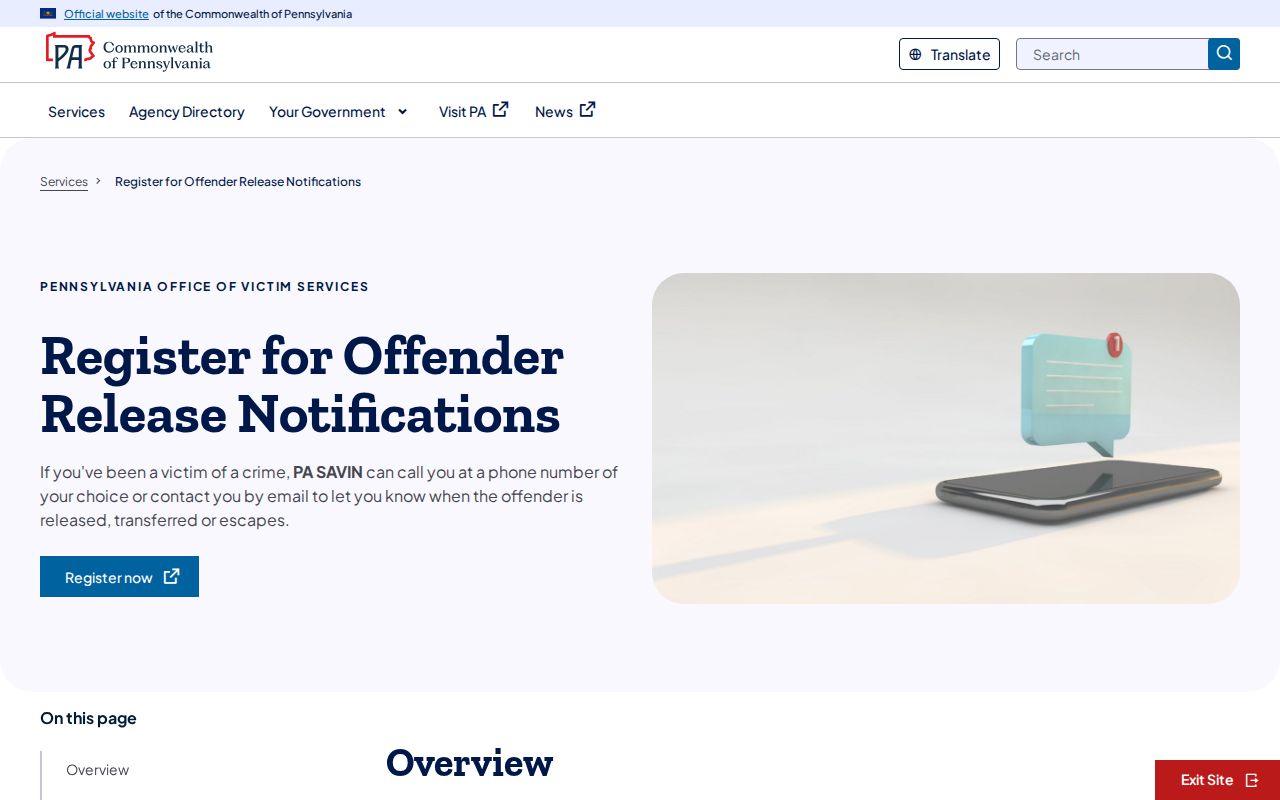
An alert may signal a change, but the assigned agency and court record remain the sources for the legal status.
Note: An absconder warning indicates an alleged supervision breach; it is not a public invitation to approach or detain the person.
Pennsylvania Supervision Discharge Records
Supervision ends through legal expiration or discharge, not simply because a public result disappears. The DOC locator does not promise a supervision-end date or discharge-certificate field. A person may have been fully discharged, may no longer fall within the locator’s public scope, or may be missed because the search inputs do not match. A no-result proves only that the record was not found with those inputs at that time.
When the end date matters, obtain the final Board or DOC documentation and reconcile it with the sentencing docket. A focused DOC Right-to-Know request can seek an existing release, separation, or sentence-status record for a named person and date range. It should request records rather than ask the agency to create a conclusion. County probation completion must be verified through the county court and supervision office.
The statewide Pennsylvania released-inmates search path explains how court, county, state, and federal sources differ after custody ends.
The UJS Case Search remains useful after many custody listings disappear.
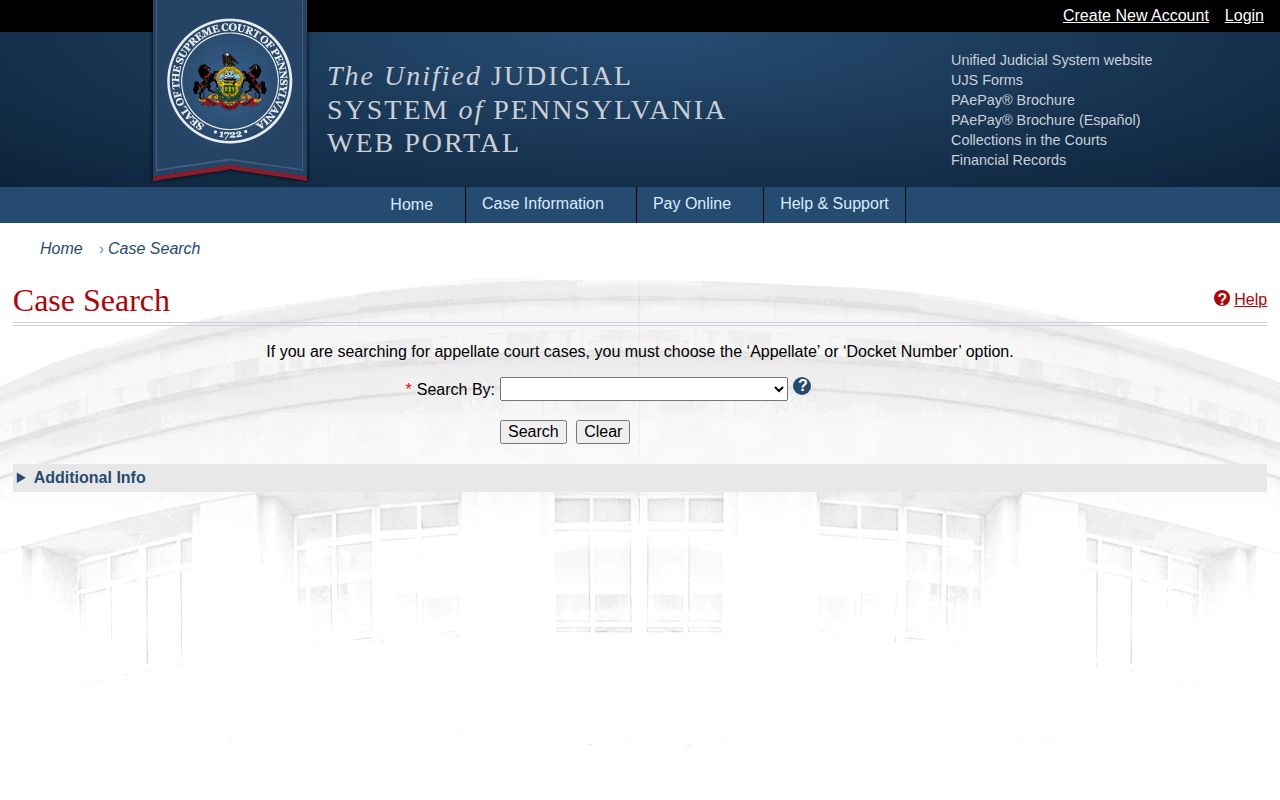
A docket can document sentence and supervision orders, but it is not the facility’s physical release log.
Pennsylvania Release Date Limits
The public supervised-person locator can display a Release Date while supervision is active. That date marks departure from institutional custody into supervision. It is not a projected date, and it is not necessarily the date on which the sentence or parole term ended. This Pennsylvania-specific distinction prevents a common mistake: reading “released” as “free of all correctional jurisdiction.”
The live Pennsylvania locator is the direct statewide check for a person under DOC supervision.
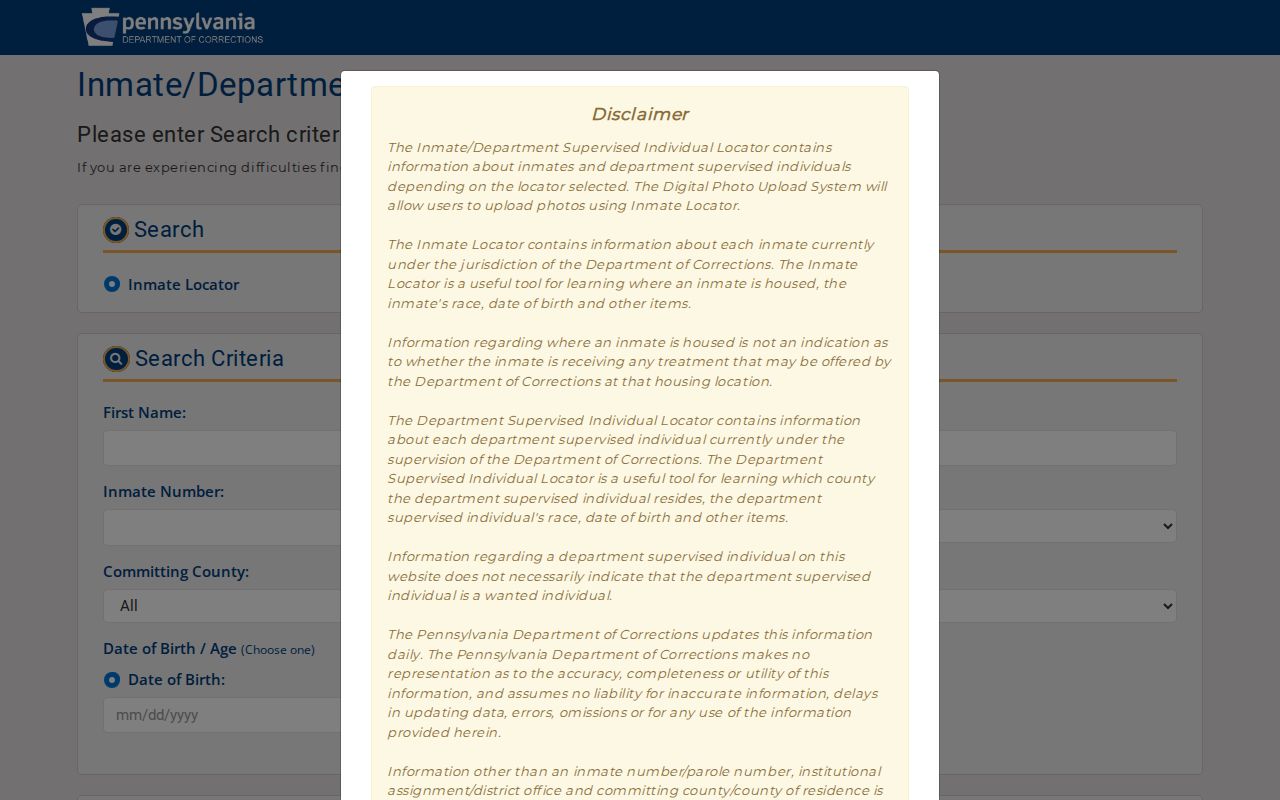
Use its date with the last update, state or district assignment, identifiers, and the underlying Board and court records.
Pennsylvania Supervision Office Routing
Office routing follows the supervision type, not simply the county where an arrest occurred. A person sentenced to state prison can return to a district that differs from both the committing county and the SCI location. The supervised-person locator may show district or state information, and DOC’s live office directory organizes field locations by region and office type. Use those fields before contacting an office. They are more useful than assuming the nearest office holds the file.
County supervision works differently. The statewide county probation and parole directory provides a path to each local department, but the actual order is found in the sentencing docket. A county department may supervise probation, county parole, or related court orders under its own structure. If the docket shows a transfer of supervision, start with the court of record and ask which office currently holds the matter. Do not infer current supervision from an old address or the county of arrest.
PA SAVIN can add an event signal for state parole, yet it is not a directory of assigned officers. The correct sequence is to identify the order, select the right state or county system, read the public status, and then use the relevant office directory. This keeps a request from being sent to the Board when DOC or a county court is the record holder.
Note: A parole office may confirm public routing while withholding protected details about reporting, conditions, or a person’s current movements.
Pennsylvania Parole Custody Changes
A person can move from an SCI to state parole, return to DOC custody after a violation process, or transfer to another custodian. Each event changes which search should answer the question. The inmate mode is the current DOC confinement route. Department Supervised Individual mode is the public state-parole route. County jail, BOP, and ICE systems must be checked separately when a transfer or detainer is plausible.
A detainer is a hold or request from another authority. It can prevent a planned release or turn an institutional exit into a transfer. A court docket may show revocation or a later order, while the public locator may show a newer custody category. Neither source should be read in isolation if their update times differ. Compare the event date, last update, identifiers, and named custodian.
PA SAVIN notifications may cover transfer, release, escape, or recapture. Those alerts are useful for learning that something changed. They do not state every legal reason for the event. Confirmation belongs with DOC, the county, the court, or the receiving federal system. This distinction is especially important when an alert says a person left one location but does not establish unrestricted community release.
Document Pennsylvania Supervision Status
For a purpose-neutral verification, keep a simple source record. Note the search mode, full name, identifier used, displayed district or location, Release Date if present, last-update information, and the date the search was performed. Then save the relevant docket reference or Board Action details. These items make it possible to explain why the result supports active parole, county probation, custody, or an unresolved status.
Conflicting sources often reflect different event dates rather than an error. A Board grant may precede release. A docket order may precede processing at the institution. A VINELink event may arrive after the source agency updates its own system. A supervised-person result can persist while parole continues, but the locator does not promise a final discharge field. Put the records in chronological order before drawing a conclusion.
If precision is still missing, ask for an existing record with a narrow date range. For state matters, the DOC request can identify release or separation material. For a Board outcome, seek the Board Action through the Board route after delivery. For county probation or parole, contact the court or county office named in the docket. Narrow requests are easier for an agency to locate and less likely to ask for a new explanation that the records law does not require it to create.
The Pennsylvania Right-to-Know process can reach existing DOC records, subject to exemptions and redaction, but it does not require the agency to answer a legal question or build a new supervision history. Identify the person, number, record type, and date range. For judicial material, use the court-access route instead of sending the same request to DOC. Keeping each custodian’s role distinct produces a clearer record of release, supervision, and discharge.