
Pennsylvania DOC Release Search Scope
The Pennsylvania Department of Corrections runs the state-prison system and supervises people on state parole. Its public service is formally called the Inmate/Department Supervised Individual Locator. That name signals its limits. It covers people now held in a Pennsylvania state correctional institution and people now supervised by the department. It is not a county-jail roster, a court index, or a roll of every person once released by DOC.
Custody type must come first. Someone arrested, held, and released by a county jail may never enter the state locator. A person sentenced in one county may be housed at an SCI elsewhere in Pennsylvania. Federal and immigration custody also use separate systems. The DOC agency page shows the statewide corrections entry point pictured below.
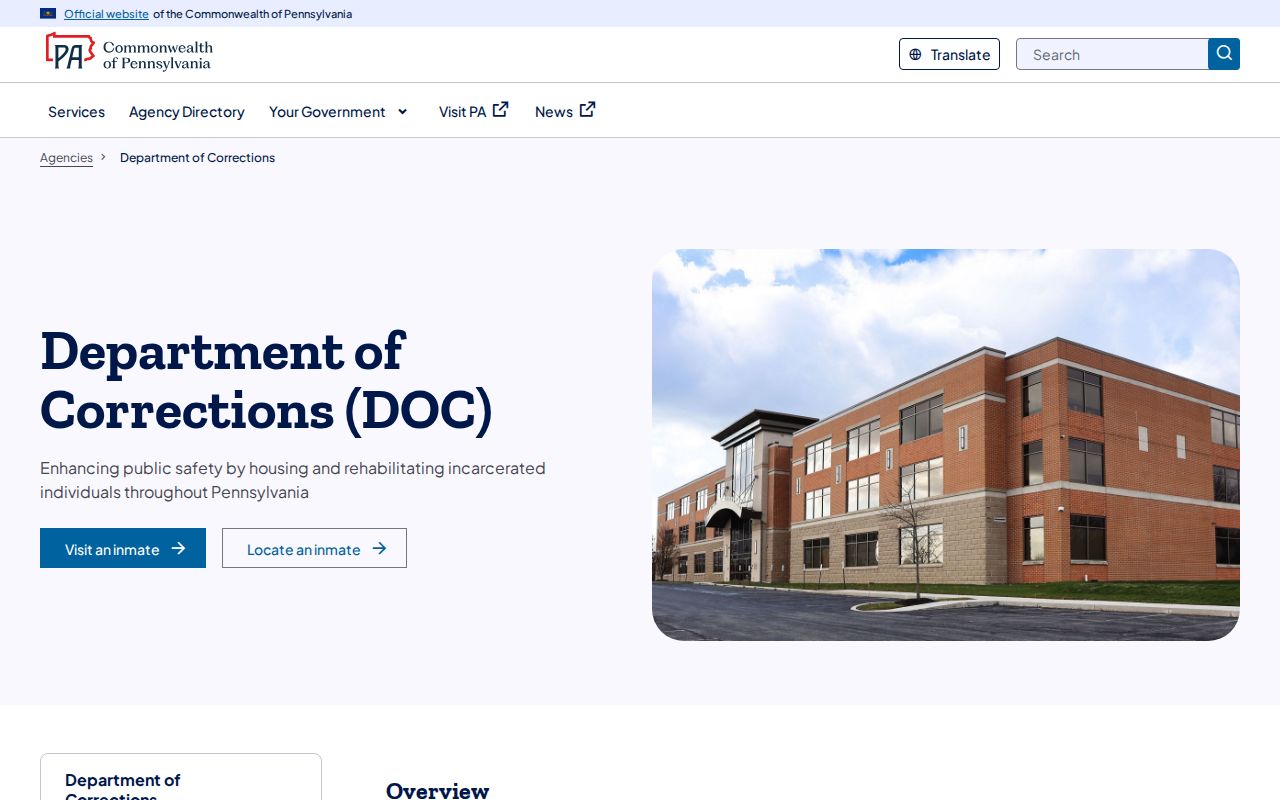
The agency page helps identify the correct state authority before a name is entered in a custody database. A result from one layer answers only for that layer.
DOC Offender Search Modes
The DOC offender search has two distinct paths. The inmate side is for current state institutional custody. It accepts a name or inmate number and exposes added filters such as gender, committing county, current location, citizenship, and birth date or age. An inmate detail can show identifying traits, a DOC number, photograph, aliases, committing county, current or permanent location, and the last update. Those fields support a present DOC match. They are not proof of release.
For a person believed to have left an SCI for state parole, choose Department Supervised Individual. Search terms can include name, parole or inmate number, gender, release date, birth information, county of residence, and district office. A match may show both identifiers, descriptive data, aliases, a photograph, state or district data, its update, and a field labeled Release Date. An asterisk may flag a person wanted as an absconder, which means alleged failure to report while supervision continues.
The official locator instructions explain the two populations and warn that identifying information may be self-reported or unverified.
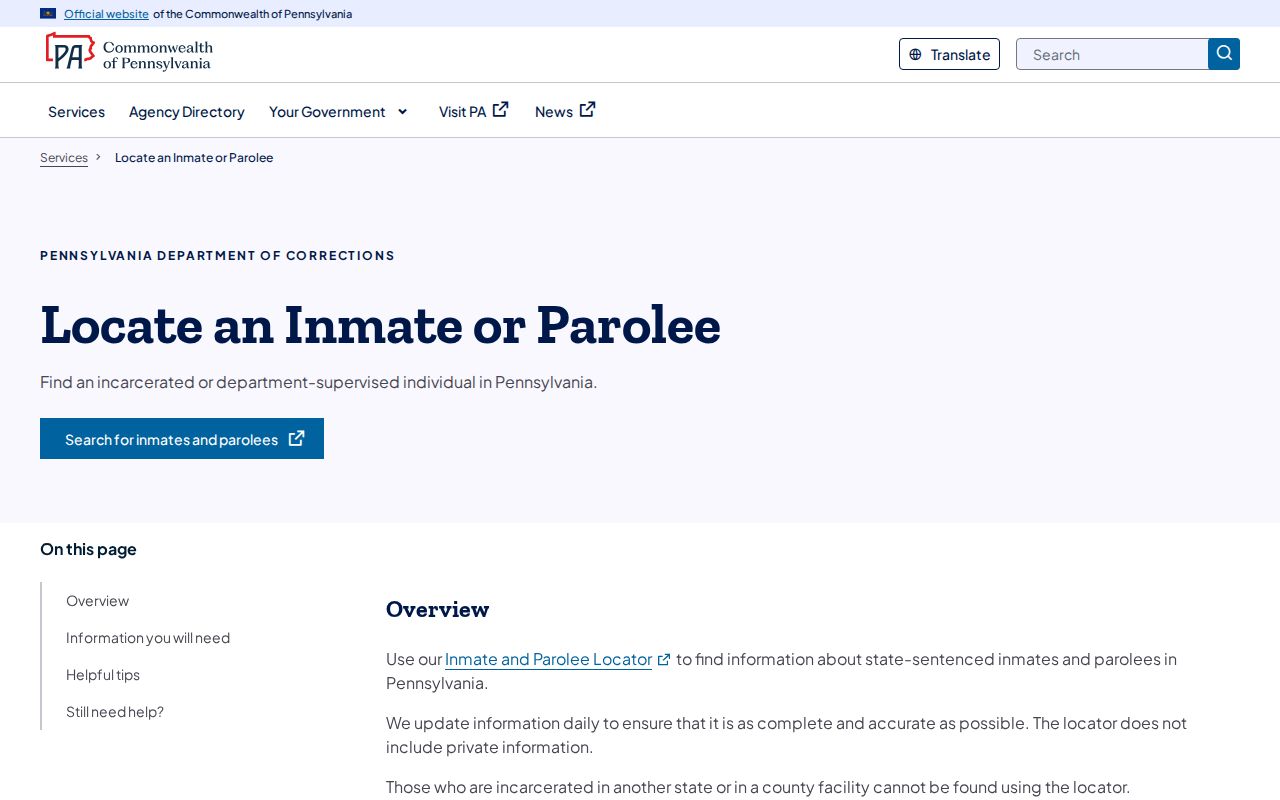
The mode choice prevents a common error: an actual release to parole belongs on the supervised side, while a person still inside an SCI belongs on the inmate side.
- Parole
- Conditional release from confinement while the state sentence and supervision continue.
- Discharge
- The legal end of a sentence or supervision, which the locator does not promise to display.
- Absconder
- A supervised person alleged to have stopped reporting as required, not necessarily a person back in custody.
Search Pennsylvania DOC Release Records
A release-first search works best when the name is paired with a stable identifier and the custody source is known. Record the mode, spelling, filters, and search date. That small audit trail helps explain a later change or a miss.
- Confirm that the case involved Pennsylvania state custody. Use the sentencing docket or committing agency when the custody level is unclear.
- Open the official locator and search the inmate mode with the DOC number when available. A current inmate match points to state institutional custody.
- Search Department Supervised Individual with the parole number, inmate number, or full name and birth information. Compare aliases and descriptive fields.
- Read the exact Release Date and last-update fields. Treat them as an institutional exit into supervision, not a projected date or final discharge.
- If both searches miss, check the court docket, county custodian, or receiving federal system. Do not turn the miss into a release claim.
- When parole is involved, obtain the written Board Action and distinguish its decision date from the later physical exit.
The live DOC locator is the operational search screen for both modes.
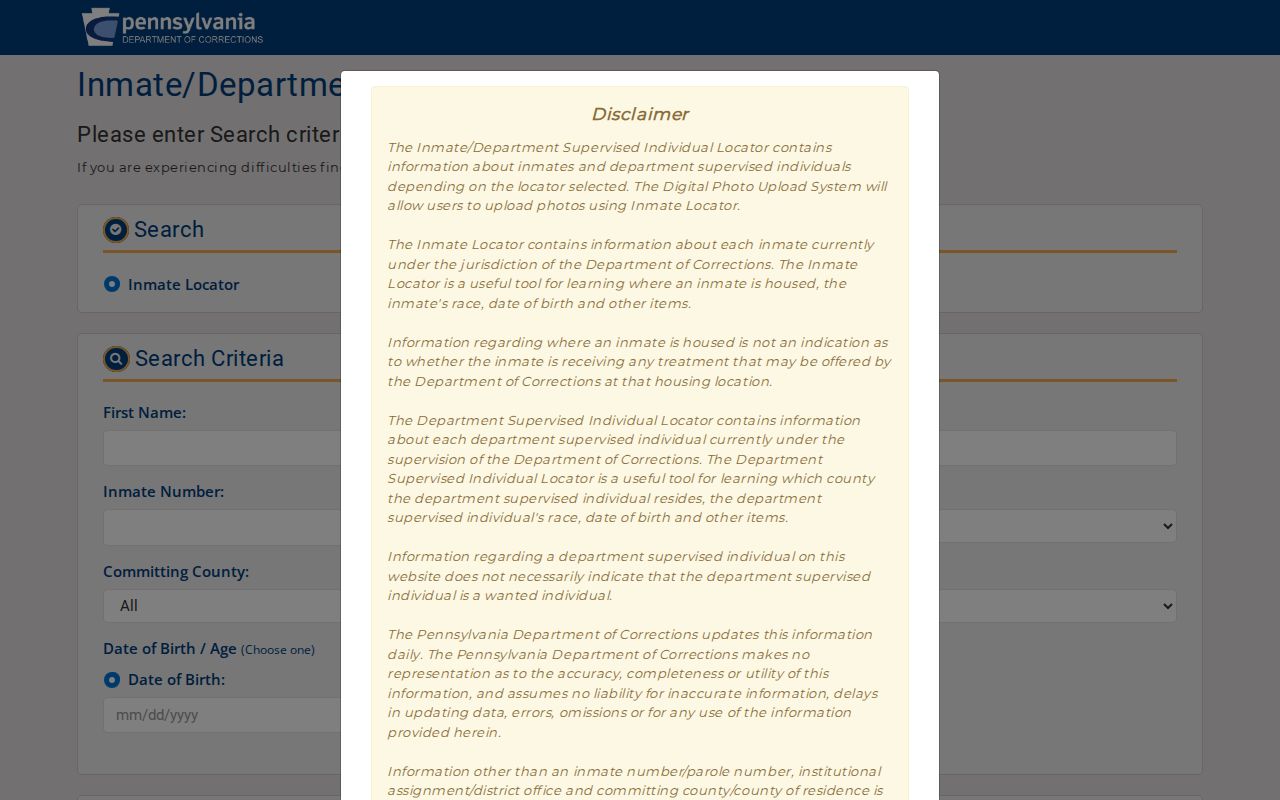
The screen supports a current search, but it does not create a permanent historical record. Save the exact field meaning rather than recasting it as a broader status.
Note: A name-only match is weak because aliases, shared names, and self-reported identity details can lead to the wrong person.
Pennsylvania Release Record Fields
The public fields differ by mode. The supervised-person result is the useful release view, but even that view is narrow. It does not promise offense, sentence, minimum, maximum, projected release, tentative release, supervision end, or a discharge certificate. The safest reading stays close to the label on screen.
| Field or result | Accurate meaning |
|---|---|
| Inmate number | DOC identifier useful for matching and focused record requests. |
| Parole number | Identifier tied to department supervision when shown. |
| Release Date | Actual transition from institutional custody for a person still in the supervised-person dataset. |
| District or state | Public routing data for ongoing supervision, not a home address. |
| Current location | Institutional location on an inmate result, subject to the displayed update. |
| Wanted: Absconder | Evidence of alleged nonreporting during supervision, not proof of a fresh arrest. |
| No result | No match from this search at this time, with several possible causes. |
Does a Release Date mean the sentence ended? No. A person can leave an SCI on parole while the sentence remains active. Final discharge must be established from final Board or DOC documentation, the sentencing docket, or a focused records request.
Pennsylvania State Release Framework
Pennsylvania state sentences are generally indeterminate. The court states a minimum and a maximum under 42 Pa.C.S. § 9756. The minimum usually marks when an eligible person may be considered for parole. It is not a promised gate date. The maximum is the sentence ceiling after lawful credit and later events are applied.
A state parole release requires a favorable Pennsylvania Parole Board decision and completion of operational steps. Home-plan review, programming, documents, detainers, and other matters can remain after a grant. DOC says an in-state home-plan investigation can typically take up to 45 days. Its joint reporting therefore treats people approved for parole but pending release as a separate group. A vote and a completed release are different events.
Other exits have different meanings. Reparole follows a return as a parole violator and a later release. A max-out is an unconditional exit at the sentence maximum. A court order is separately counted. Movement to a hospital, another jurisdiction, community corrections setting, or a detaining agency may end an SCI stay without an unrestricted return to the community.
| Event | What it establishes | What still needs proof |
|---|---|---|
| Minimum reached | Possible parole eligibility if the person qualifies | Board grant and actual exit |
| Board grant | Favorable parole decision | Home plan, holds, conditions, and gate exit |
| Release Date shown | Institutional release into active DOC supervision | Final sentence discharge |
| Maximum reached | Sentence ceiling, subject to lawful computation | Any separate custody basis |
A deeper account of the Board’s decision and pending-release gap appears in the Pennsylvania parole hearings record.
Pennsylvania DOC Release Trends
DOC counted 11,646 releases and exits during calendar 2024, up from 11,396 in 2023. The increase was 250, about 2.2 percent. Yet the headline total is not a count of unique people who returned to the community. The official categories preserve that distinction.
| 2024 category | Count | Included events |
|---|---|---|
| Unconditional | 2,038 | 1,989 max-outs and 49 court-order releases |
| Conditional | 8,106 | 4,906 state paroles, 15 county paroles, and 3,185 state reparoles |
| Deaths and other | 1,502 | 211 deaths and 1,291 other exits |
| Total | 11,646 | All report categories combined |
The other category includes hospital and other-jurisdiction transfers plus released detainers. Those events show why an institutional exit cannot always be called a community release. Conditional releases rose by 51 from 2023, while unconditional releases rose by 48. Each figure is a flow count for a set year, not a current public roster.
The official Reports and Dashboards page provides the release source and related DOC and Parole Board measures.
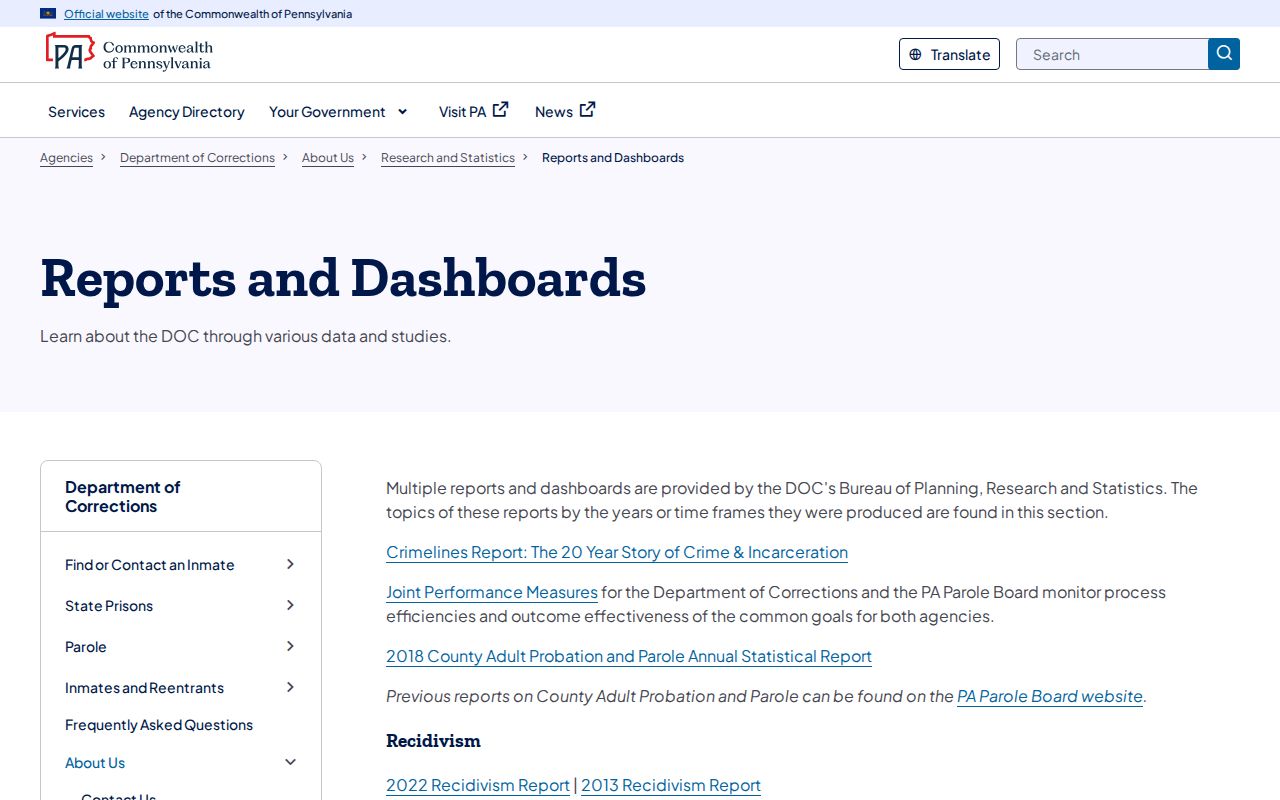
The reporting page is the right source for dated totals, while the individual locator remains the route for a current person-specific check.
Note: Always carry the year and category label with a Pennsylvania release figure so transfers are not recast as street releases.
Pennsylvania DOC Release Day Logistics
DOC Fiscal Administration Policy 3.1.1 describes statewide release logistics, but it does not establish one guaranteed gate-money payment. The policy says DOC is not legally required to give a release gratuity and treats any gratuity as a gift. People are responsible for keeping funds and suitable clothes when possible. Facilities normally release them in personal clothes, may accept one set from outside, and must provide clean, seasonally suitable clothes when no proper set is available.
Account money also follows a defined path. For an account above $100, policy permits up to $100 in cash, with the balance issued by check or release debit card. More cash needs written justification tied to transportation or expenses. DOC also issues JPay MasterCard-branded release debit cards at SCIs. The card is active at issue and holds the person’s own account balance. It is not proof of a state-funded gratuity, and DOC warns of an inactivity fee after 90 days.
Transportation depends on need and release type. Facilities should arrange travel to the nearest commercial transportation point. When a person lacks funds, policy provides for a surface-transportation ticket and miscellaneous funds set by the Business Manager. An indigent trip lasting more than three hours can qualify for up to $8 per meal period and up to $10 in miscellaneous funds, based on travel time. A parolee receives the least costly surface route to an approved destination in Pennsylvania or a bordering state. A person who completes the sentence is routed under the policy to the legal or established residence.
These are conditional operating rules. They do not mean every release includes cash, a ticket, a card, or the same route. They also help distinguish an actual processed exit from a planned date. Clothing, account settlement, approved destination, transport, holds, and supervision instructions are operational facts that can remain unresolved after the sentence minimum or a favorable parole action.
Pennsylvania DOC Versus County Release
DOC records state sentences and state supervision. A county jail records its own bookings, bonds, time-served exits, local court releases, and transfers. Pennsylvania has no single county-jail release interface across all 67 counties. Some counties publish a current roster or use a vendor; some rely on PA SAVIN; others require a direct records inquiry. A county event does not become a DOC event just because it occurred in Pennsylvania.
| Custody layer | Best first source | Release limitation |
|---|---|---|
| State prison | DOC inmate and supervised-person modes | Not a permanent discharge archive |
| County jail | Holding county, jail record, PA SAVIN, and docket | Local publication varies by county |
| Federal prison | BOP Inmate Locator | Addresses federal custody only |
| Immigration detention | ICE detainee locator and official contacts | Separate civil custody system |
The Pennsylvania county directory routes a county-only case to the locality that maintained the source record. A transfer to BOP, ICE, another county, a hospital, or another jurisdiction is not community release and should be checked with the receiving custodian.
Request Pennsylvania DOC Release Records
When the public locator lacks the needed date or a fully discharged person no longer appears, request an existing record from the DOC open-records officer. Pennsylvania’s Right-to-Know Law creates the access process, assigns agency officers, recognizes exemptions, and supplies an appeal route through the Office of Open Records. It does not require DOC to answer a research question, give a legal conclusion, or make a custom report.
A focused request should identify the person by full name and DOC or parole number, name the record category, and state a narrow date range. One useful description asks for the existing record showing the date and type of separation from DOC institutional custody and the destination or custody code if maintained. Ask for sentence-status material by its existing name. Personal security, medical, investigative, and other protected information may be redacted or withheld.
- Open the current DOC Right-to-Know page and review its instructions tied to DC-ADM 003.
- Name the person, identifier, record type, and a focused period. Request records rather than an explanation.
- Send the request to the listed Agency Open Records Officer by an accepted route.
- Read the response for exemptions, redactions, or instructions. Use the Office of Open Records process when an appeal is available and warranted.
The current DOC Right-to-Know page lists the live request channels and officer information.
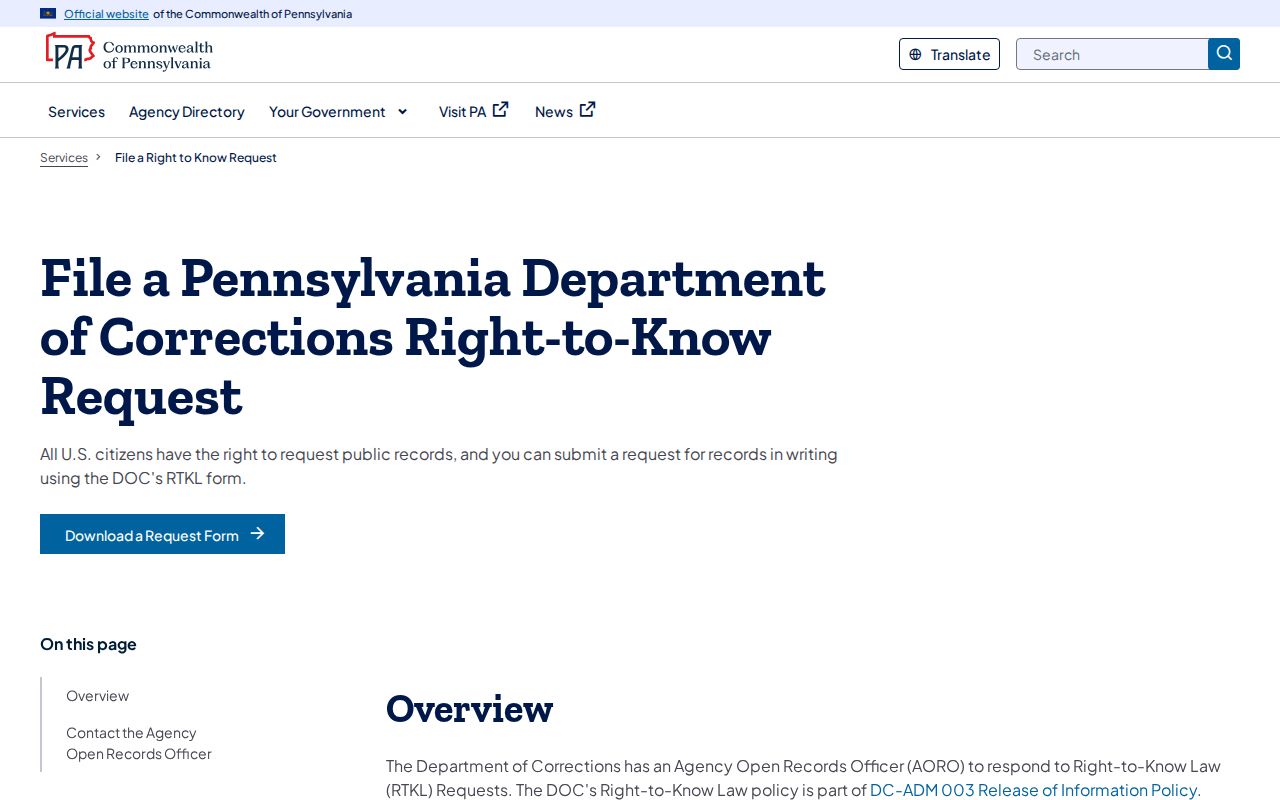
The linked agency page should control because office contacts can change. Court filings follow the judicial access system, and county-jail releases belong with the county custodian, not this state request office.
Verify Pennsylvania Final Discharge
Final discharge is not the same event as leaving an SCI. A person released on state parole can remain subject to the sentence and DOC supervision until legal expiration or discharge. The public supervised-person locator may show the earlier Release Date, district data, and an active record. It does not promise a supervision-end field, discharge date, or discharge certificate.
A later no-result is therefore ambiguous. It can be consistent with discharge, but it cannot prove the date or reason. Use the final Board or DOC document together with the sentencing docket. If the needed completion record is not public, request the narrow existing record from DOC. The same care applies to an absconder flag: it indicates alleged nonreporting during ongoing supervision, not a new incarceration, a second release, or final discharge.
A durable verification record should name the exact event. “Released from institutional custody on the displayed date while under supervision” is different from “sentence discharged on the documented completion date.” Keeping those statements separate prevents the DOC offender search from being stretched beyond the fields and population the agency actually publishes.