
Pennsylvania Projected Versus Actual Release
A projected date estimates when a person may leave custody under the sentence and facts known at that point. An actual release date records the completed exit from institutional custody. Between those points, the court, DOC, Parole Board, another custodian, and the person’s conduct or program status may affect what happens. A judicial minimum is often a parole-eligibility point. It is not a release appointment. The maximum is the sentence ceiling after lawful credit and later changes.
The distinction is even sharper for people awaiting trial. A pretrial detainee has not yet received a sentence, so there is no state sentence to project. Bail, dismissal, a plea, trial, a court order, or transfer can change custody. For a county-sentenced person, the county court and jail are the proper sources. Pennsylvania DOC rules should not be imported into a local term without proof.
The official Pennsylvania locator instructions describe current inmates and supervised people, but they do not promise a public projected-date field.
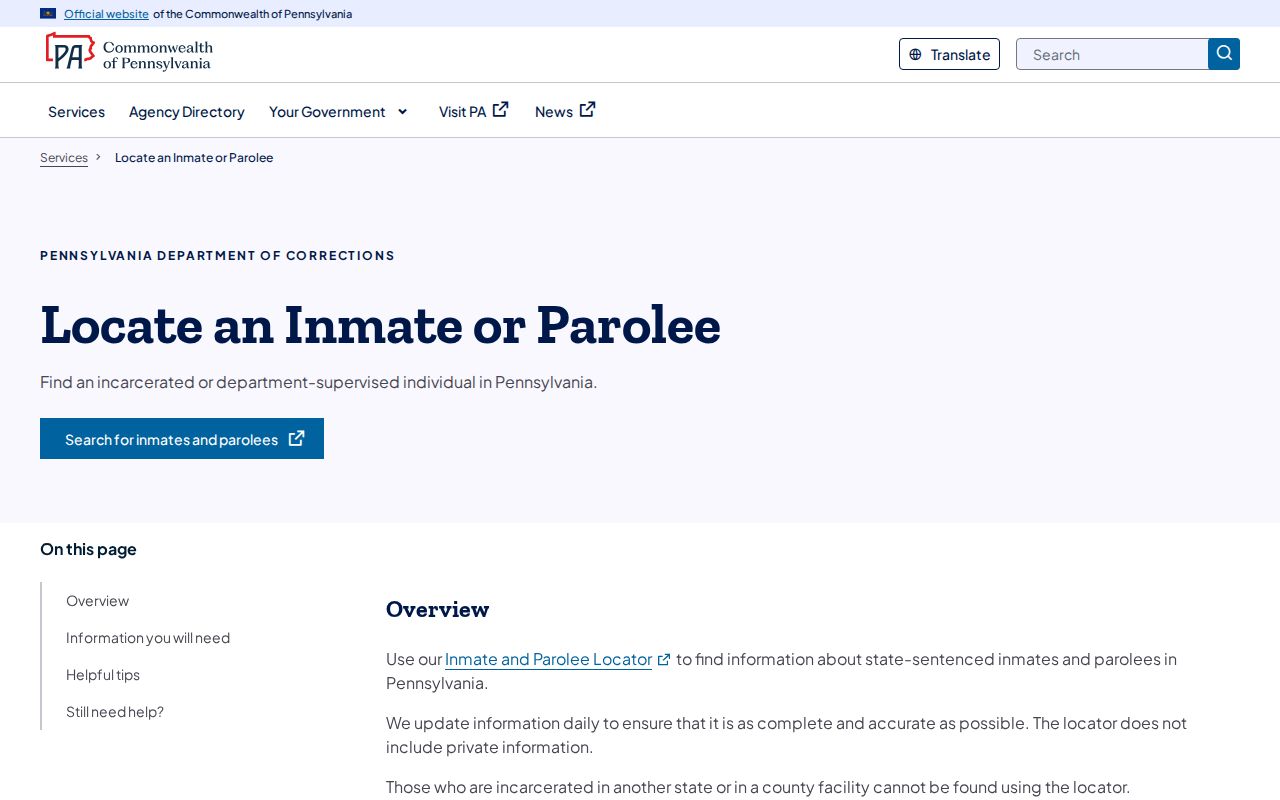
The service description is useful for custody status, while the sentence and parole records supply the dates that the public locator omits.
Pennsylvania DOC Release Date Limits
The public DOC locator has no verified field labeled Projected Release Date or Tentative Release Date. Its inmate mode does not promise a minimum, maximum, sentence computation, or forecast. The Department Supervised Individual mode may show a field labeled Release Date, but that is an actual past transition from an SCI into active DOC supervision. It must never be relabeled as a future projection.
A current inmate result can identify the person, DOC number, aliases, committing county, current or permanent location, and update information. Those details help establish the correct record. They do not solve the date calculation. A supervised-person result can establish that institutional release occurred and supervision continues. It does not promise a final discharge date or certificate.
The live DOC locator pictured below lets a user choose between the two populations.
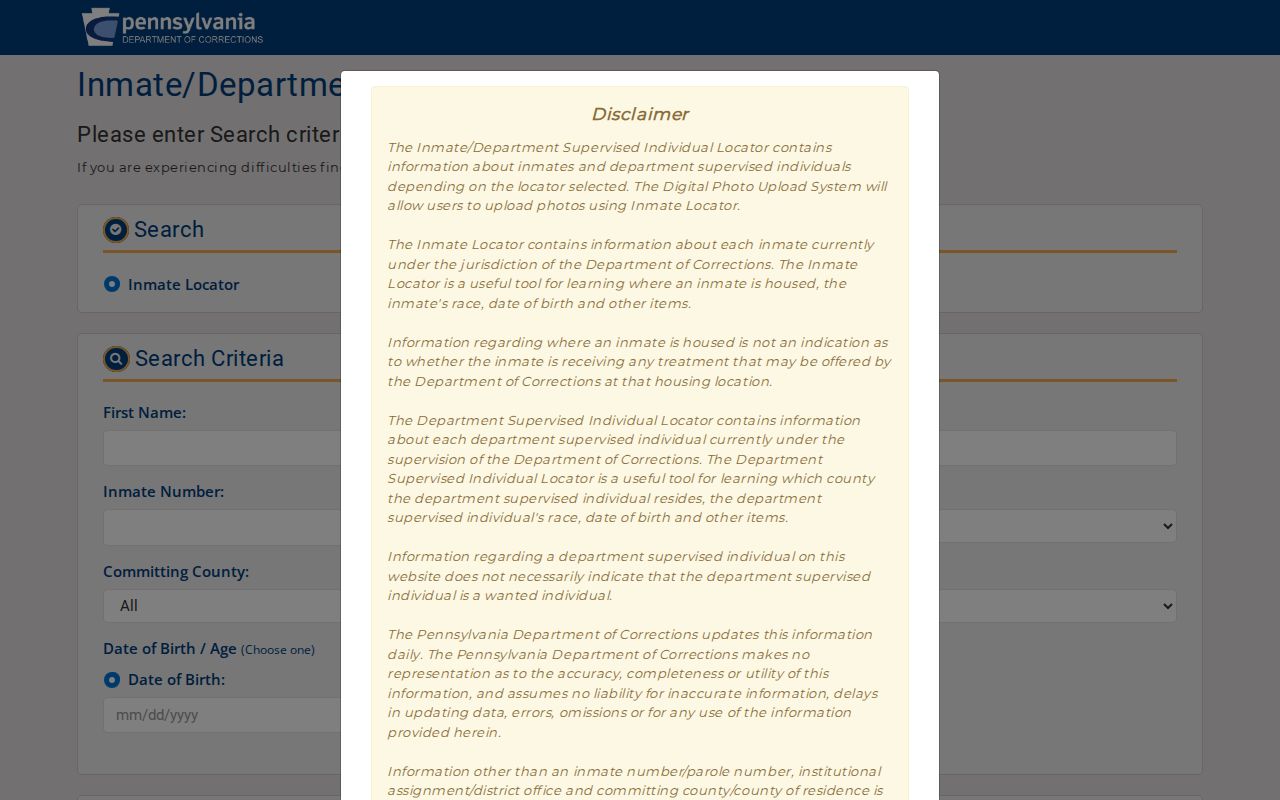
Use the result to classify current status. Then move to the sentencing docket, Board record, or DOC sentence-status record for the dates that are not public there.
Note: A locator miss does not establish release, because spelling, aliases, final discharge, another custody level, and data timing can all cause it.
Find Pennsylvania Projected Release Records
The most reliable workflow labels each date before comparing it. Start with the custody layer and the court order. Do not subtract a stock percentage from a term, and do not assume the first date found is the physical release date.
- Classify the case as pretrial county custody, a county sentence, Pennsylvania state custody, federal custody, or immigration detention.
- Search the DOC locator for a state case and capture the DOC number, committing county, present mode, and last update.
- Open the criminal docket and sentencing order. Identify the ordinary minimum, maximum, credit, RRRI minimum if imposed, and later orders.
- If parole is involved, obtain the written Board Action. Separate its action date, review or effective terms, and any pending prerequisites.
- Ask DOC for an existing sentence-status or computation record when the operative calculation is not public. Request a record, not an estimate.
- Confirm the completed release through the later supervised-person record, facility record, notification event, or receiving custodian.
The statewide UJS Case Search is the durable public route to Pennsylvania criminal dockets.
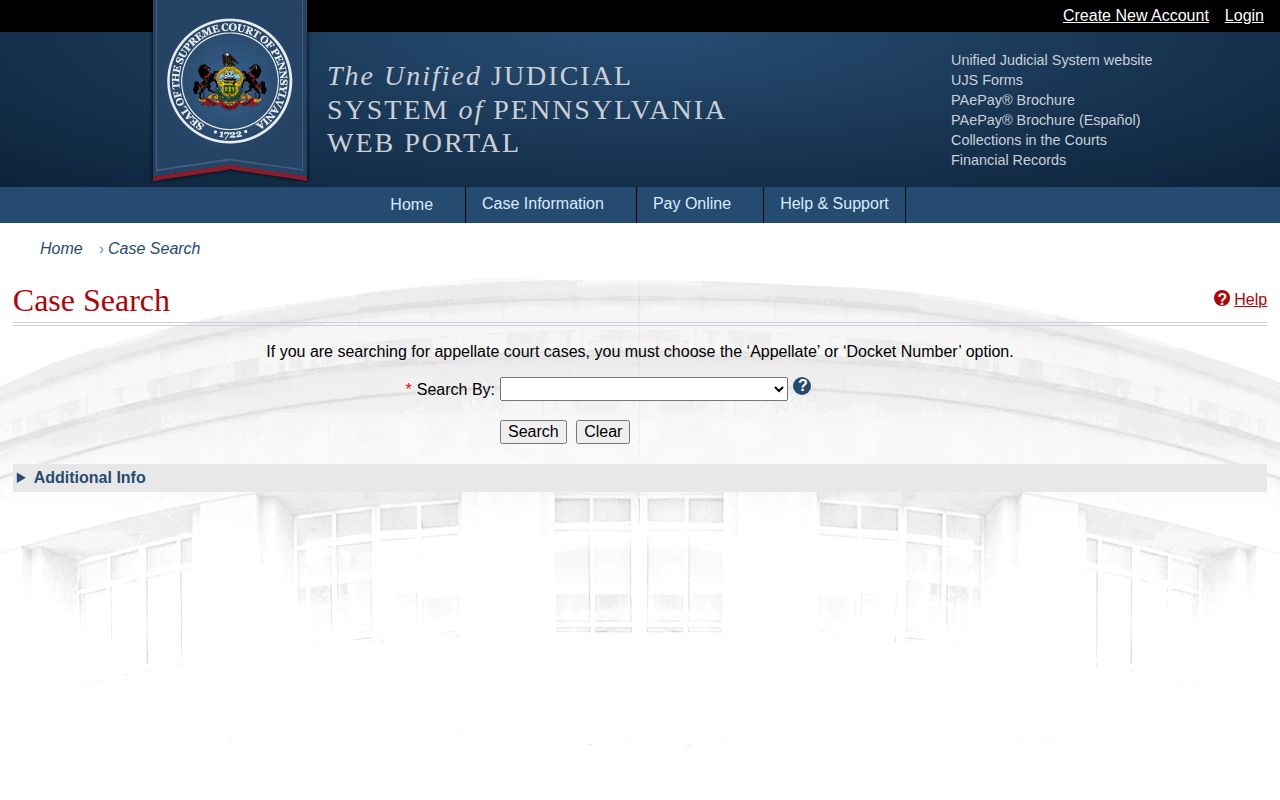
A docket can show the sentence, credit, parole or probation terms, revocation, disposition, and later orders. It explains legal authority, but it is not the prison gate’s movement log.
A full account of state locator fields and discharge limits is available through the DOC offender search release record.
Pennsylvania Indeterminate Release Dates
Pennsylvania normally uses indeterminate state sentences. Under 42 Pa.C.S. § 9756, the court states a minimum and maximum. The ordinary minimum is usually no more than half the maximum. For an eligible person, reaching the minimum permits parole consideration. It does not force the Board to grant release. Life and death sentences are excluded from ordinary parole, and 61 Pa.C.S. § 6137 contains other limits and procedures.
| Date or event | What it means | Is release assured? |
|---|---|---|
| Ordinary minimum | Parole eligibility point for a qualifying state prisoner | No |
| RRRI minimum | Earlier statutory eligibility point if imposed and all requirements remain met | No |
| Parole interview | Board review step | No |
| Board grant | Favorable conditional-release decision | Not until release steps finish |
| Maximum | Sentence ceiling after lawful computation | Separate holds may still control custody |
| Release Date | Actual institutional exit shown for a currently supervised person | Release occurred, but discharge may not have |
Parole staff can still need an approved home plan, documents, release conditions, and resolution of a detainer. DOC says an in-state home-plan investigation can typically take up to 45 days. Thus a grant can be valid while the person remains in an institution as approved but pending release.
Pennsylvania RRRI Release Minimums
Pennsylvania does not impose a universal rule that all state prisoners serve 85 percent. Nor does it use one statewide days-per-month good-time formula for every state sentence. Its distinctive earned-incentive mechanism is the Recidivism Risk Reduction Incentive, known as RRRI. The sentencing court imposes an RRRI minimum only for a person who meets the statute’s eligibility rules.
Under 61 Pa.C.S. § 4505, the RRRI minimum is three-fourths of an ordinary minimum of three years or less. It is five-sixths of an ordinary minimum longer than three years, subject to the statute’s calculation and rounding rules. Defined convictions and circumstances can exclude eligibility. The sentence and statute control, not a generic online calculator.
| Ordinary minimum | Statutory RRRI fraction | Key limit |
|---|---|---|
| Three years or less | Three-fourths | Only when RRRI is lawfully imposed and eligibility continues |
| Longer than three years | Five-sixths | Statutory calculation and rounding apply |
Reaching that minimum still does not guarantee release. Section 4506 requires continuing eligibility, required programming, a suitable conduct record, an adequate reentry plan, established conditions, and the required risk finding. The date is therefore a conditional threshold, not a reservation for release.
- Ordinary minimum
- The court-set parole eligibility point under the standard sentence.
- RRRI minimum
- A shorter statutory eligibility point imposed for a qualifying person.
- Maximum
- The sentence ceiling after lawful credit and later legal events.
Pennsylvania Release Dates Can Change
Even a correct calculation can change when a later fact affects the sentence or the release process. Some events alter eligibility. Others do not change the sentence dates but prevent a planned institutional exit. Each should be described by its own legal effect.
| Factor | Possible effect | Record to check |
|---|---|---|
| Sentence credit | Changes the computed service of the term | Sentencing order and DOC sentence-status record |
| New or amended order | Changes the legal sentence or its structure | UJS docket and filed order |
| Concurrent or consecutive terms | Affects aggregation and the controlling dates | Sentencing records and DOC computation |
| RRRI eligibility or conduct | Can prevent release at the RRRI minimum | Statutory findings and DOC program record |
| Program completion | May be required before RRRI or parole release | DOC and Board records |
| Detainer or other hold | Can cause transfer or continued custody elsewhere | Board Action, docket, and receiving custodian |
| Home-plan review | Can keep an approved parole case pending | DOC home-plan status and Board material |
A detainer deserves special care. Leaving DOC under a county, federal, or immigration hold can be an institutional release while remaining a custodial transfer. It should not be described as a return to the community. Likewise, movement to community corrections may remain within a structured corrections or parole setting.
The official DOC reports and dashboards distinguish approved-for-parole cases that are still pending release.
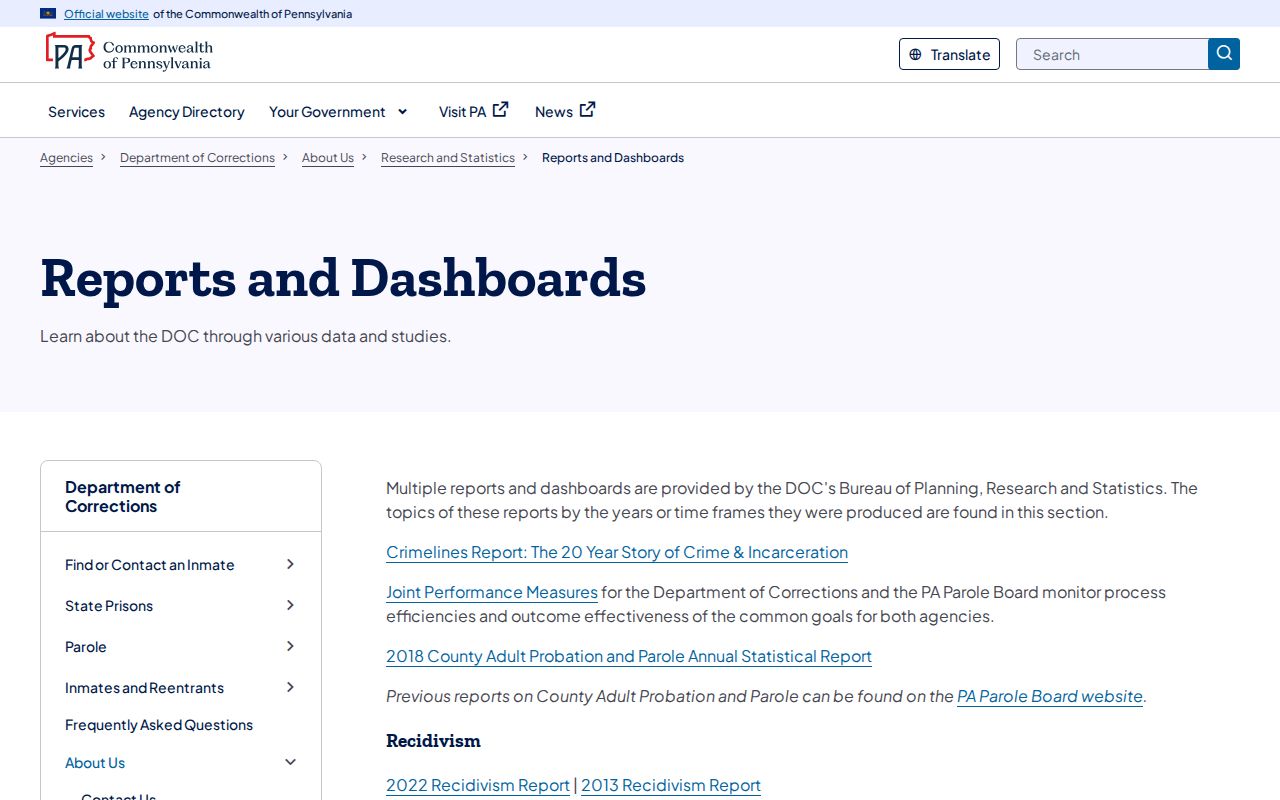
That separate measure prevents a favorable decision from being mistaken for a completed physical release.
Note: The reason a date moved should come from the named record, not from a guess based on a later locator update.
Pennsylvania Parole Release Timing
The Pennsylvania Parole Board makes the state parole decision, while DOC handles institutional release steps and state field supervision. A parole interview is not a probation hearing. The Board does not publish a person-by-person hearing calendar or a public name-and-ID decision database. Its official result is the written Board Action delivered first to the incarcerated person.
The Board’s material says an initial parole or reparole decision can generally take up to six weeks after an interview, depending on the case. That is a decision timeframe, not a release promise. Some cases do not require an interview, and voting structures vary by case type. A grant can be followed by home-plan work, conditions, programs, a detainer, or administrative processing.
The official Parole Interview page explains the review stage and Board process.
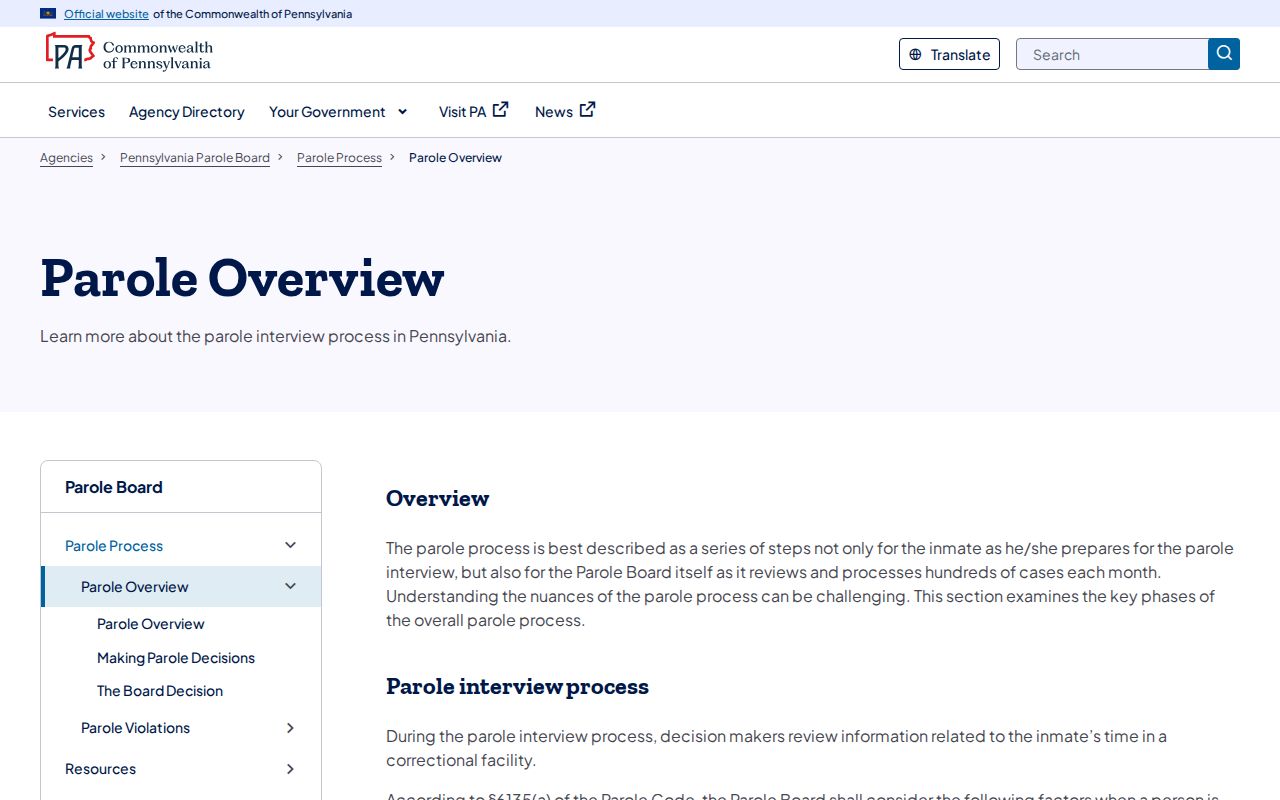
The process page helps identify when a case is under review, but the written Board Action and later release record remain necessary for a person-specific conclusion.
Pennsylvania County Release Date Boundaries
RRRI is a state statutory mechanism and should not be applied automatically to a county-jail term. County custody can involve a pretrial case, a county sentence, local parole, time credit, a court release order, or a transfer. The relevant county docket and jail records identify which event controls. A state DOC number or state sentence must be established before the state calculation is used.
The court record can show the sentence and legal credit, but the holding facility records physical movement. A release order may precede processing. A transfer can end the county booking while custody continues with DOC, another county, BOP, or ICE. For that reason, “not on the jail roster” is not a projected date and not proof of a return to the community.
A county records request should target existing fields such as commitment date, separation date and time, separation type, and destination or transfer code if maintained. State-prison sentence-status records go to DOC. Judicial filings stay with the court system. These custodians answer different parts of the date question and should not be treated as interchangeable.
Request Pennsylvania Sentence Date Records
When the public sources do not reveal the operative computation, ask DOC for an identifiable existing sentence-status or release record. Include the full name, DOC or parole number, the record category, and a focused period. A request for the existing document that states the computed minimum, maximum, credit, or separation date is more precise than asking the agency, “When will this person get out?” The Right-to-Know Law does not require DOC to create a forecast, answer questions, or give a legal conclusion.
Any response can contain lawful redactions or cite an exemption. Compare the produced record with the sentencing order and later docket entries. If parole is involved, add the Board Action and determine whether a home plan, program, detainer, or condition remained open. This record-by-record method takes more care than a percentage formula, but it preserves the legal label and date source.
Confirm Pennsylvania Actual Release Date
Final confirmation should match the event being claimed. The docket establishes the court’s sentence and later orders. The Board Action establishes a parole decision. The DOC supervised-person locator may show the actual Release Date while supervision remains active. PA SAVIN can signal a custody event, but the Commonwealth warns against relying on notifications alone. A facility separation record can provide the institutional date and type.
If a sentence-status computation is not public, submit a focused Right-to-Know request to DOC for an existing record. Include the full name, DOC or parole number, record category, and narrow date range. Do not ask the agency to predict a date or draw a legal conclusion. County-jail records go to the county officer, and filed judicial records remain with the court system.
For a pending event, the Pennsylvania VINELink check can add a release notification to the verification plan. Treat the alert as a signal, then confirm it with the source facility or agency.